Returning Black Friday purchases in Norway: 14 days online, no right in shops – how to count the deadline
Shopped online on Black Friday? In Norway you have 14 days to cancel, counted from the day after delivery – but no legal right to return goods bought in a shop. Deadlines with dates, who pays return postage, the exceptions and what to do if the seller refuses.
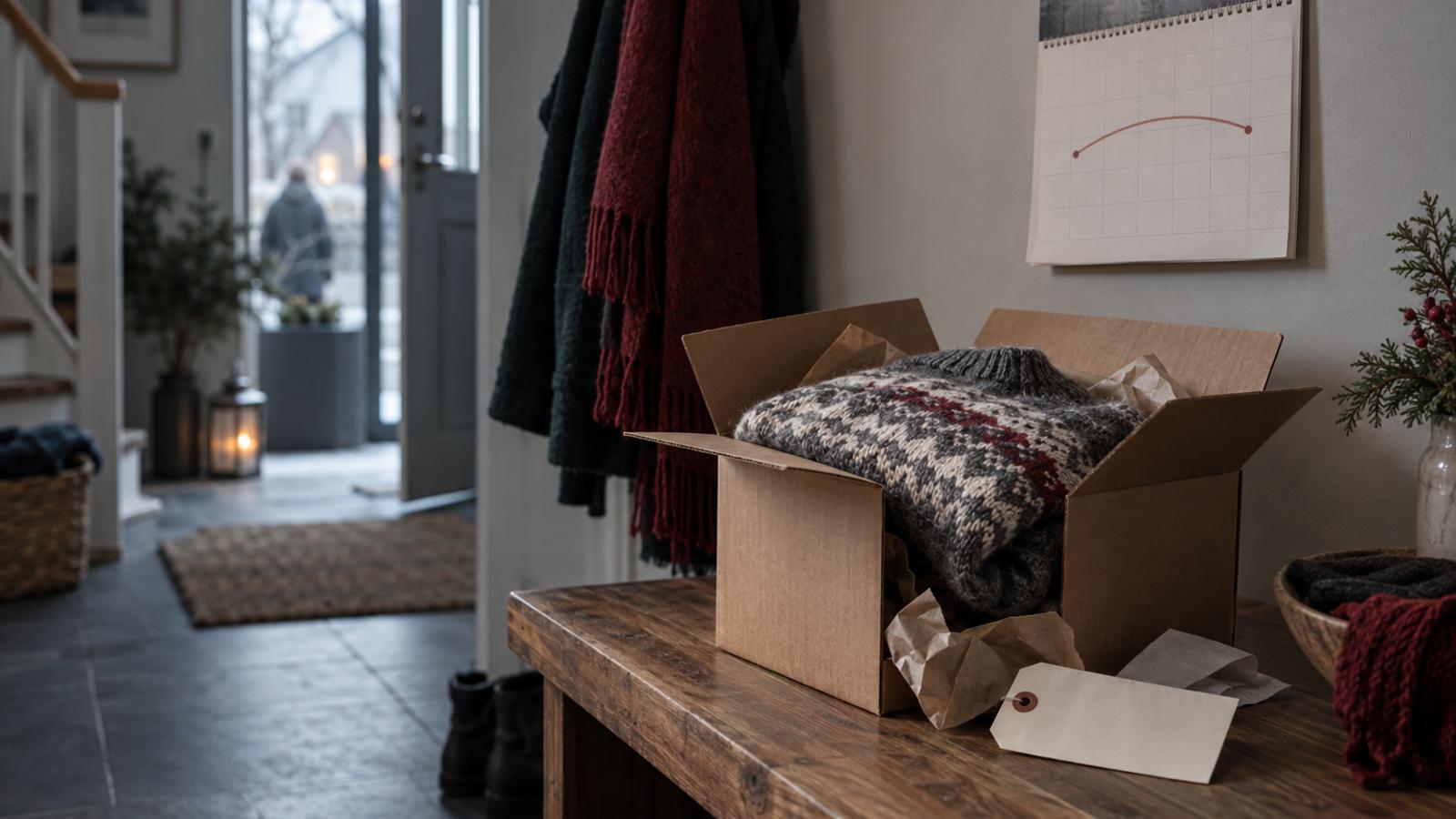
Bought something online on Black Friday in Norway? You have 14 days to change your mind under section 21 of the Cancellation Act (angrerettloven). Bought it in a shop? Then there is no legal right to return it – only the shop’s own policy. The clock starts the day after delivery: order on Friday 27 November, collect on Tuesday 1 December, and you can cancel until Tuesday 15 December.
- Online purchases: 14 days from the day you have the goods in your hands – not from the day you ordered.
- In-store purchases: no statutory right of withdrawal; only an exchange or “open purchase” policy if the shop has one.
- Return postage: usually paid by you, but only if the seller told you so before you bought.
- Refund: within 14 days of your notice, including the original standard delivery charge.
- Missing information: if the seller never told you about your rights, you get up to 12 extra months.
- Exceptions: made-to-measure items, perishables, unsealed hygiene products and downloaded digital content, among others.
This is the third piece in Nettsak’s Black Friday series, after our explainer on the 30-day reference-price rule and fake discounts. The retail association Virke expects NOK 72.4 billion to be spent in Norwegian retail in November alone – all retail, not just online (Virke via NTB, 9 November 2026).
Do I have a right to return online purchases in Norway?
Yes – if you bought online, by phone or from a doorstep seller. The Cancellation Act only covers distance contracts and contracts concluded away from business premises. The Norwegian Consumer Council (Forbrukerrådet) puts it plainly: you only have a right of withdrawal when you shop outside a fixed retail outlet, such as online or on your doorstep (Forbrukerrådet, updated April 2024, in Norwegian).
Click and collect still counts as a distance sale, according to the ministry’s guidance on the act.
The act implements the EU’s Consumer Rights Directive through the EEA Agreement, so the same 14 days apply across the EU and EEA (Your Europe, checked April 2026). They do not cover purchases from private individuals, and they will not help against a fake shop that never ships anything – for that, see our guide to Black Week scams and fake web shops.
How long is the deadline, and when does it start?
Under section 21 of the Cancellation Act, the period ends 14 days from the day the consumer takes physical possession of the goods. If one order arrives in several parcels, the clock starts when the last one arrives.
The official guidance on the act, written by Forbrukerrådet for the Ministry of Children and Equality in 2017, adds two points. A collection slip from the post office does not start the clock – picking up the parcel does. And the day you receive the goods is not counted.
Counting the deadline for a Black Friday order
- Collected Tuesday 1 December: day one is Wednesday 2 December; the last day is Tuesday 15 December 2026.
- Delivered Saturday 28 November: 14 days end on Saturday 12 December, extended to Monday 14 December.
- Delivered Saturday 12 December: the period ends on Boxing Day, Saturday 26 December, and is extended to Monday 28 December.
Rule of thumb: 14 days is exactly two weeks, so the last day falls on the same weekday you received the goods. The guidance says a deadline landing on a weekend or public holiday moves to the next working day – but that is not in the act itself, so do not cut it fine.
Do I have to use the cancellation form?
No. Section 20 lets you use the standard form or make any other unambiguous statement – an email is enough. You are in time as long as you send it before the deadline, but the burden of proof is on you, so keep a copy.
The seller must give you the form and tell you about your right to cancel. If it does not, the period is extended by 12 months; if the information arrives within that year, you get 14 days from when you received it.
Who pays for return shipping?
Normally you do. Section 25 says the consumer pays only the direct cost of sending the goods back. The seller has to cover it if it promised free returns or failed to tell you that you would pay.
Send the item back within 14 days of giving notice. The seller must refund everything you paid, including standard delivery, within 14 days of your notice and without fees; if you chose express delivery, you only get the standard rate back. The shop may hold the refund until the goods arrive or you show proof of postage.
Can I open and try the item?
Yes, in the way you could in a shop. The guidance says you can try clothes on, but not wear them. Do not remove the tags, and do not load a new laptop with software.
A demand for the original packaging does not hold, since the act cannot be overridden to the consumer’s detriment. But if you handled the item more than needed, the seller can charge for the loss in value.
Which purchases cannot be returned?
Section 22 lists the exceptions. The ones that matter most at Christmas are:
- goods that spoil quickly, such as food and flowers
- items made to your specifications or clearly personalised, such as engraved gifts
- sealed hygiene products once the seal is broken
- sealed audio, video or software once unsealed
- digital downloads you started after agreeing that you would lose the right to cancel
That last one covers most game purchases – see our piece on GTA 6’s price and download size in Norway. A boxed disc still in its shrink-wrap can be returned.
Can I return things bought in a shop – and what is an “open purchase”?
No. In a physical shop you are at the mercy of the shop’s exchange rules, says Forbrukerrådet. Exchanges are not a legal right, but they are so common you can usually count on one – except, often, on sale items. A credit note is valid for three years unless it says otherwise.
“Åpent kjøp” – an open purchase – is a voluntary policy that lets you bring back an unused item for a refund. Some chains, Forbrukerrådet notes, refund unused goods after six months. The terms on your receipt or the shop’s website are what count.
What if the shop refuses?
Complain to the seller in writing, attaching the receipt and a copy of your cancellation notice. If that fails, the Norwegian Consumer Authority (Forbrukertilsynet) can mediate. If mediation fails, the case can go to the Consumer Disputes Commission (Forbrukerklageutvalget), a court-like body whose decisions become binding unless one party takes the case to the district court. As of September 2026 it takes 15 to 17 months to reach a decision.
If you paid by card, your bank may be able to help with a chargeback. Forbrukerrådet warns that “the complaint deadline is usually shorter when using a debit card” (Forbrukerrådet, March 2026). If you bought on credit, tell the finance company that you have cancelled.
A faulty product is a different matter: that is a complaint about a defect, not a cancellation. Under section 27 of the Consumer Purchases Act, you have at least two months from discovering the fault and up to two years from delivery – five for goods meant to last much longer – whether you bought online or in store.
Is a “cancel button” coming to Norwegian web shops?
Yes, but not yet. An amendment to the Cancellation Act dated 19 June 2026 adds a new section 20 a, requiring an electronic cancellation function labelled “angre avtalen” (cancel the contract), a confirm button and a receipt showing the date and time. As of 22 November 2026 it has not come into force, and no start date has been set.
Frequently asked questions
Can I return Black Friday purchases in Norway?
Yes, if you bought online, by phone or on the doorstep. Purchases made in a physical shop carry no statutory right of withdrawal.
How long do I have to cancel an online order?
14 days, counted from the day after you receive the goods. If the deadline falls on a weekend or public holiday, the official guidance moves it to the next working day.
Who pays for returning the goods?
You do, if the shop told you before you bought. Otherwise the seller pays, and the original standard delivery charge is always refunded.