The Mars rover makes its own decisions: What does it mean for self-driving cars?
NASA's Perseverance rover has completed a historic drive on Mars where artificial intelligence planned the entire route without ongoing commands from people on Earth. The breakthrough shows how far autonomous technology has come, but also why the road from Mars to Norwegian roads is still more complicated than many think.
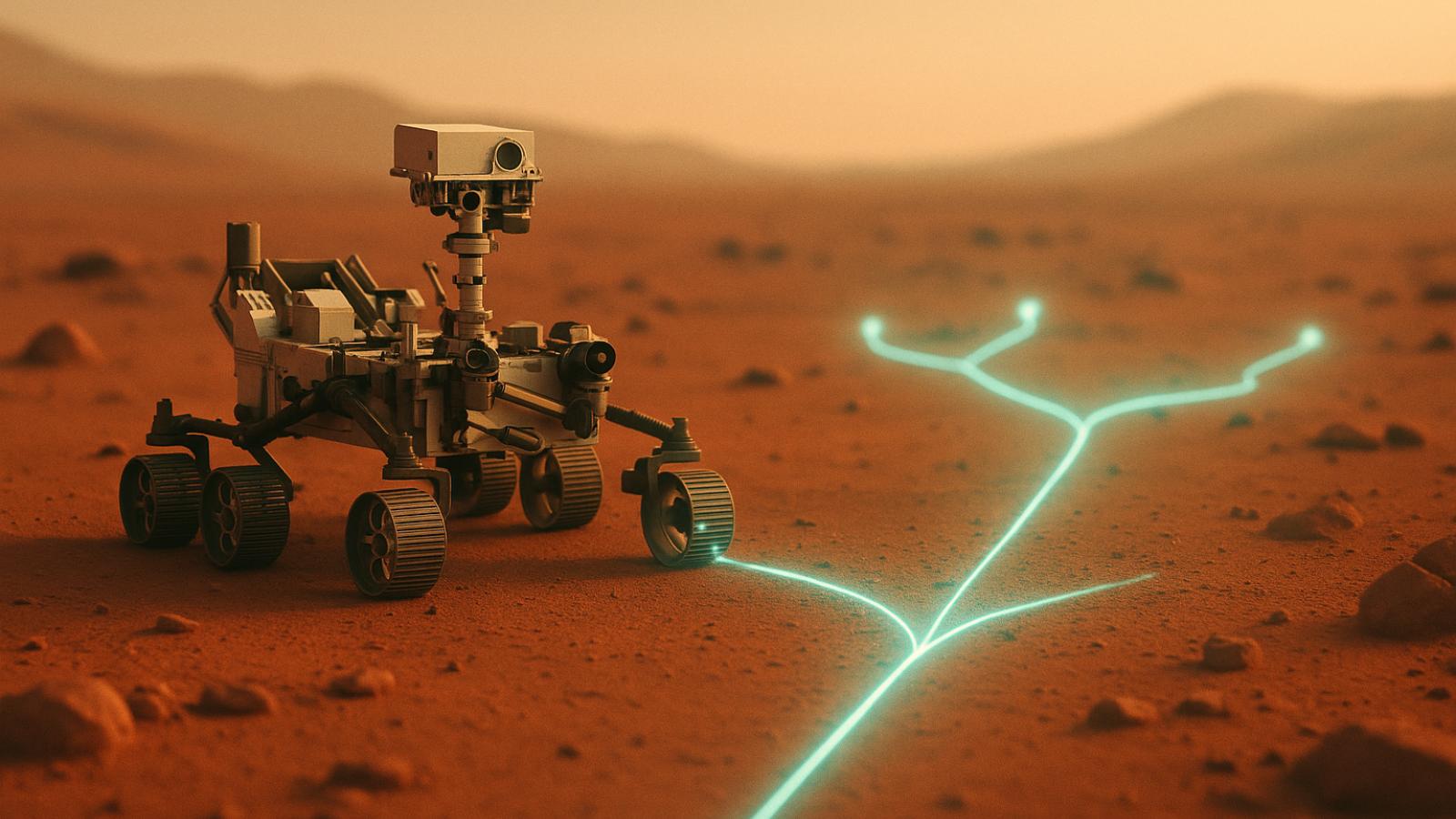
NASA's Perseverance rover has completed a historic drive on Mars where artificial intelligence planned the entire route without ongoing commands from people on Earth. The breakthrough shows how far autonomous technology has come, but also why the road from Mars to Norwegian roads is still more complicated than many think.
A milestone for space travel and automotive technology
Perseverance has just made history by completing the first fully AI-planned drive on Mars. Along the way, it did not receive a single steering signal from Earth-based operators.
This is remarkable for a simple reason: communication between Earth and Mars takes between 5 and 20 minutes each way. Real-time control is therefore impossible. For the rover to move safely, it must in practice be able to manage on its own.
Why this matters
The autonomous drive shows that AI can now:
- analyse terrain on its own
- plan routes based on safety and efficiency
- make critical decisions without human supervision
And this happens in an environment far more extreme than anything a vehicle encounters on Earth:
- temperatures from -125°C to 20°C
- powerful dust storms
- unpredictable terrain
- no infrastructure
Mars, in other words, offers a brutal testing ground for autonomous technology. If a system works there, it says something important about how robust it can become.
What does this mean for cars on Earth?
If AI can navigate on Mars, surely Norwegian roads should be an easy task?
Both yes and no.
The advantage on Mars
Mars is technically demanding, but socially simple. The rover does not have to deal with:
- other vehicles
- pedestrians
- traffic rules
- unpredictable human behaviour
The challenge on Earth
On Earth, the surroundings themselves are often simpler, but the situations far more complex. Self-driving cars must handle:
- millions of people who do not always behave predictably
- social norms in traffic, such as letting someone into the queue
- legal liability if an accident occurs
A Mars rover does not need to interpret a glance from a cyclist at a junction or judge whether a pedestrian will suddenly run across the road. A self-driving car must be able to do that.
The technology is nonetheless maturing
NASA's breakthrough shows that AI can:
- act quickly in critical situations
- navigate in unfamiliar terrain
- function reliably without human backup
These are exactly the qualities self-driving cars need. The ability to make decisions when the surroundings change rapidly is absolutely crucial both on Mars and on the motorway.
What happens now?
NASA is planning more autonomous missions, while the automotive industry follows developments closely.
Tesla, Waymo and Mercedes already have advanced self-driving systems. NASA's success could help strengthen trust in the technology, both among regulators and the public.
This does not mean that the breakthrough on Mars automatically solves all the challenges on Earth. But it sends a clear signal: autonomous systems are getting steadily better at handling complex situations without direct human control.
The question is perhaps no longer whether self-driving cars are coming, but when they will be good enough to earn full trust.
Sources: NASA, ScienceDaily