Aimo Park Norway AS issues parking fines - even when charging is impossible
Aimo Park Norway AS is receiving complaints from drivers across the country. Nettsak's review of a specific case from Sandefjord shows why: The charging facility did not work, but the fine still...
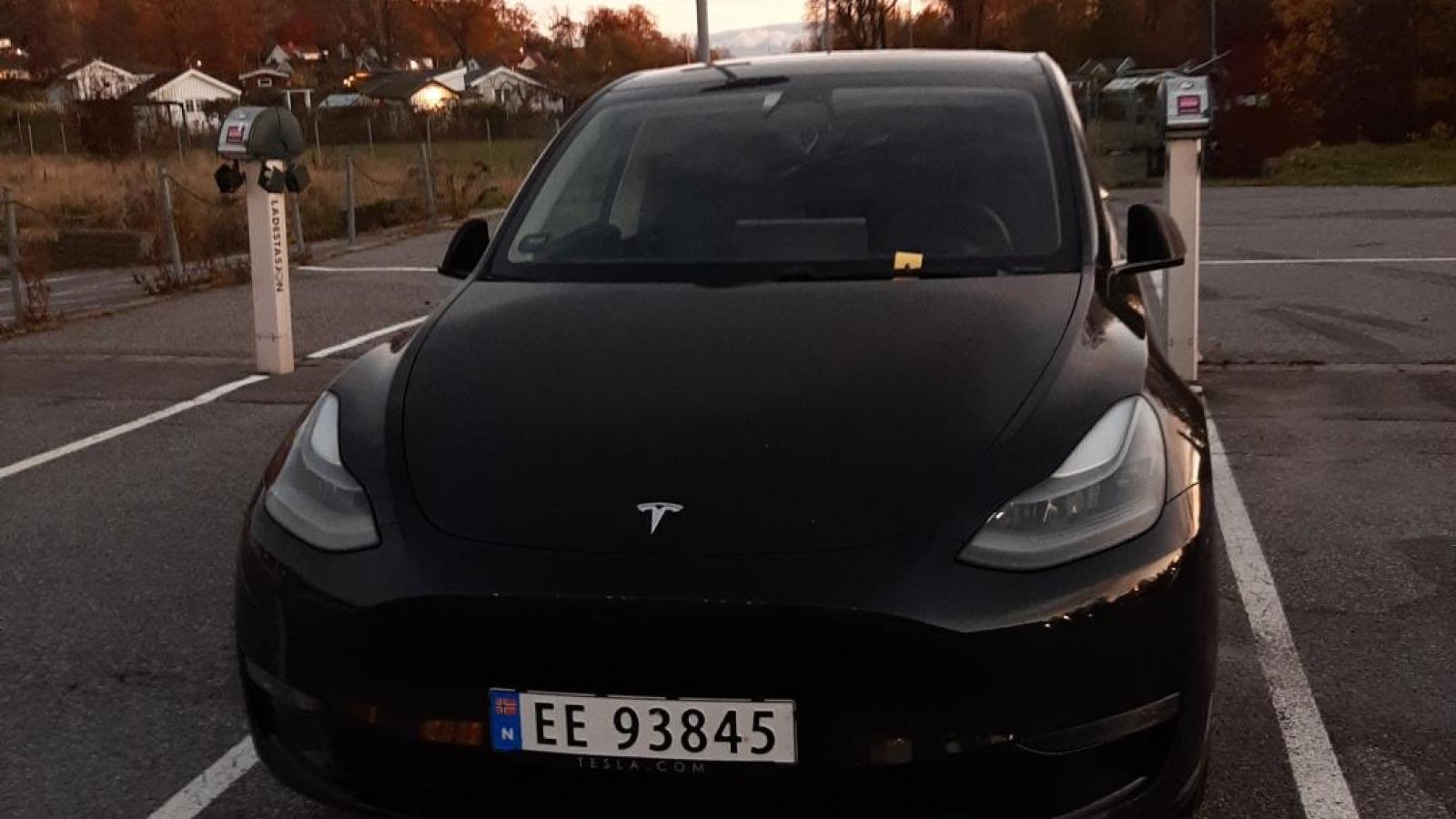
Aimo Park Norway AS is receiving complaints from drivers across the country. Nettsak's review of a specific case from Sandefjord shows why: The charging facility did not work, but the fine still stood. The complaint is handled in a closed system with no receipt or access to the case file - by a lawyer who signs emails with an abbreviated name. The case raises questions about transparency, due process and ethics in private parking.
How it started
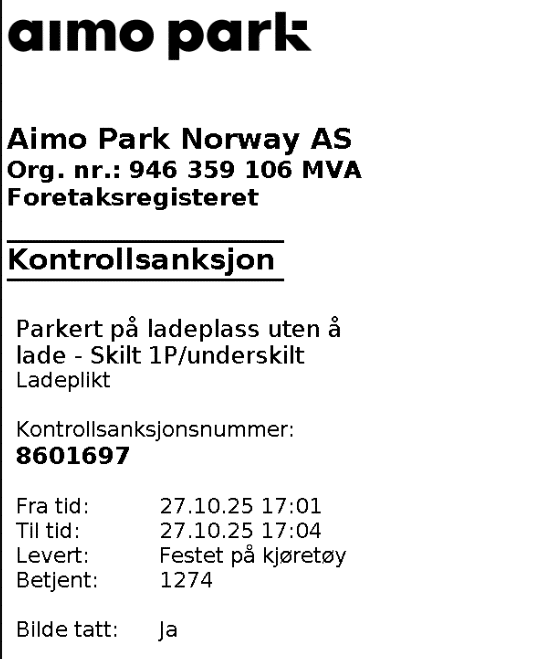
What began as a seemingly simple parking fine in Sandefjord has developed into a question of due process and consumer protection. Håkon Berntsen was issued a control sanction of NOK 660 from Aimo Park Norway AS - at a time when charging was impossible.
According to the penalty notice, the fine was issued at 17:01, that is, one hour after the regular fee period (08:00-16:00) had ended. The car was parked in a charging space, but the charging post supplied no power. The sanction was nevertheless issued for "failure to charge". Berntsen tried repeatedly to start charging via the EasyPark app, which registered the start, but power never arrived. A new test almost a week later showed exactly the same fault.
"I tried to charge, with no effect. Now I see that the same fault still occurs. That means Aimo Park is aware of the fault, but nevertheless continues to fine people here."Håkon Berntsen, to Nettsak
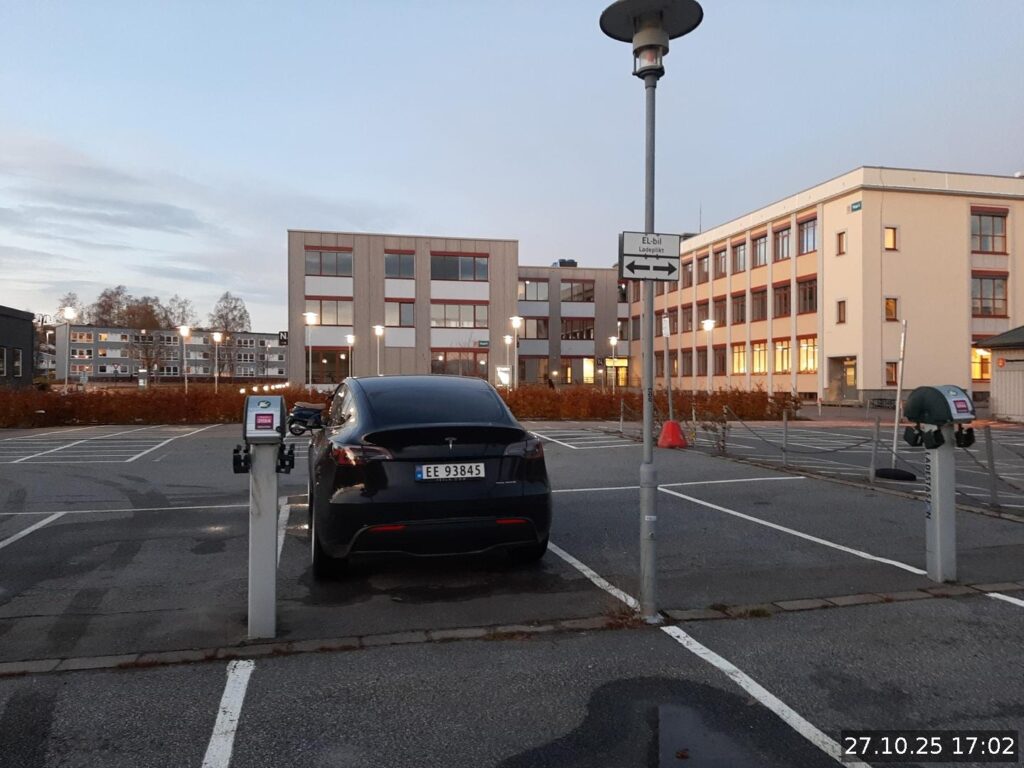
Several local sources report that charging in the same area has been problematic "for a long time, especially in the evening". In the inspector's photos, the area appears to be without lighting at the charging points - which supports the power irregularity.
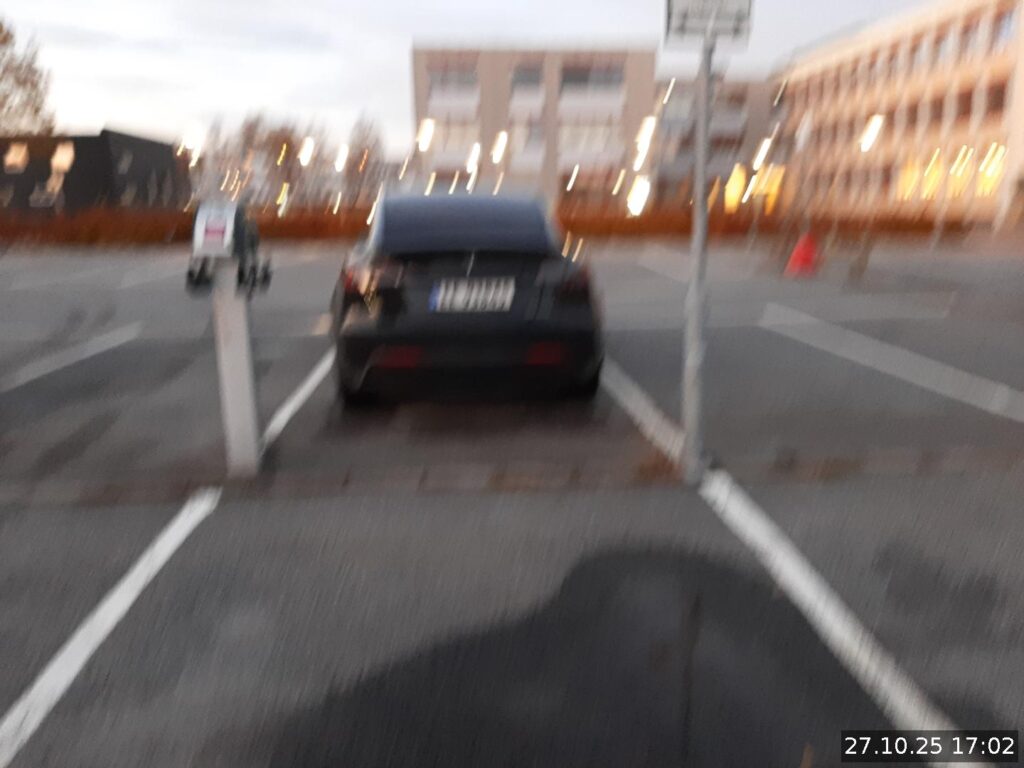
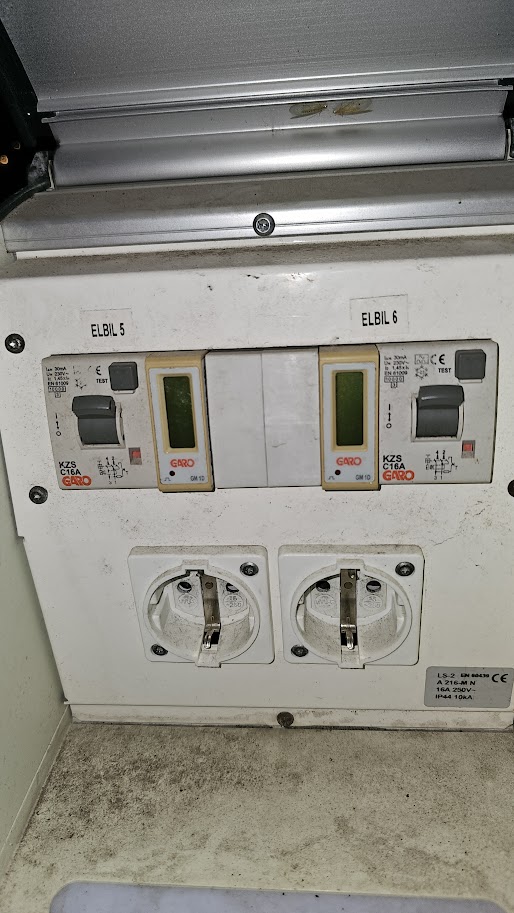
Field observation: The charging still does not work
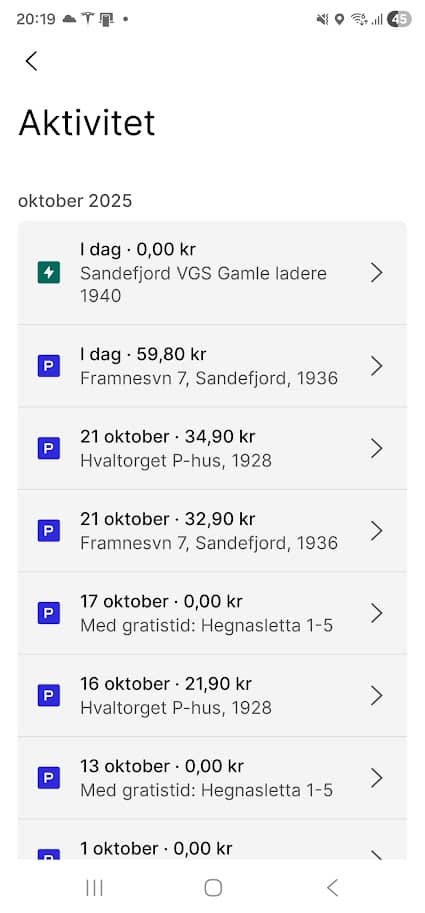
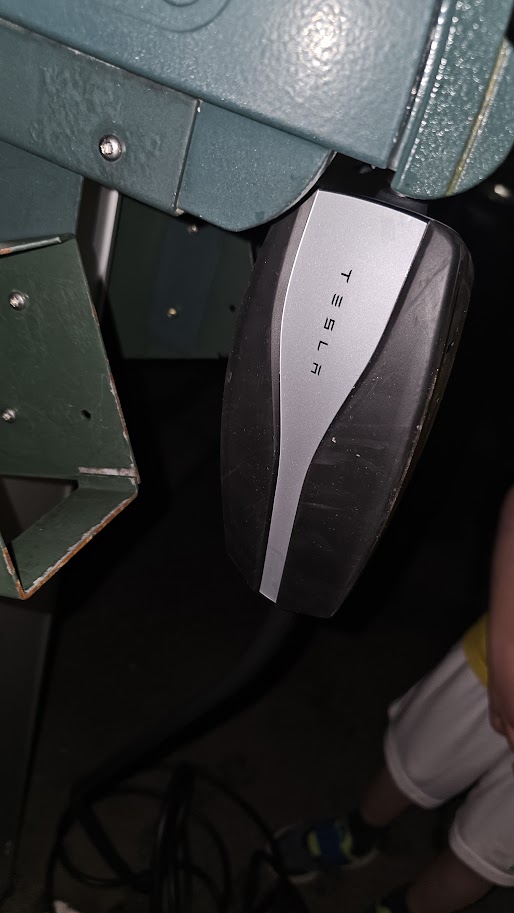
To verify the actual circumstances, Nettsak carried out a new test one week after the penalty was issued. EasyPark registered that charging was started, but the charging post supplied no power. The indicator lights remained dark, and no measurable power consumption appeared in the app. There was no barrier or warning set up to indicate that the post was out of service.
Documentation:
- Photo of the charging point with no lights/power indicators
- Screenshots from EasyPark showing "charging started" with no registered consumption
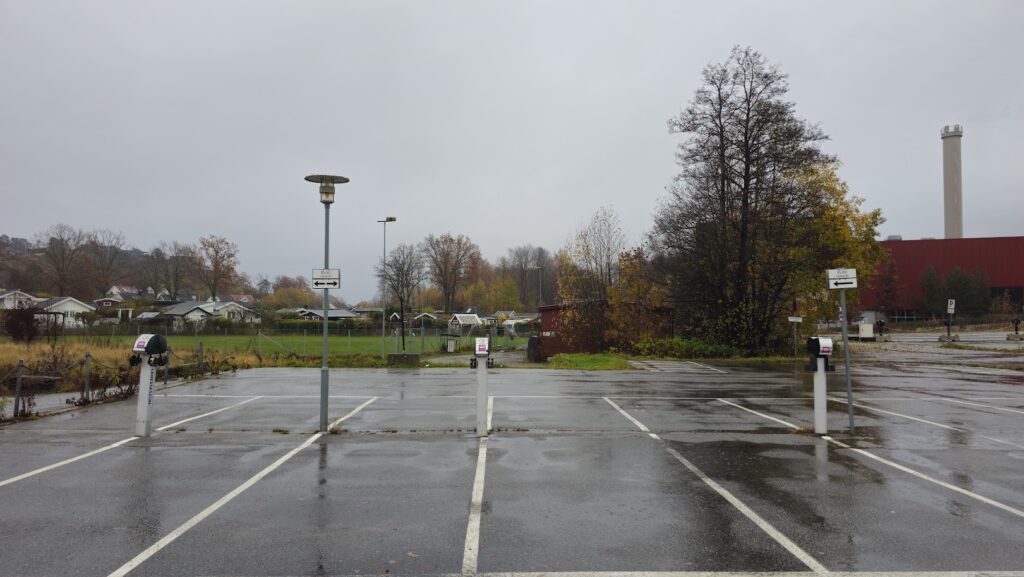
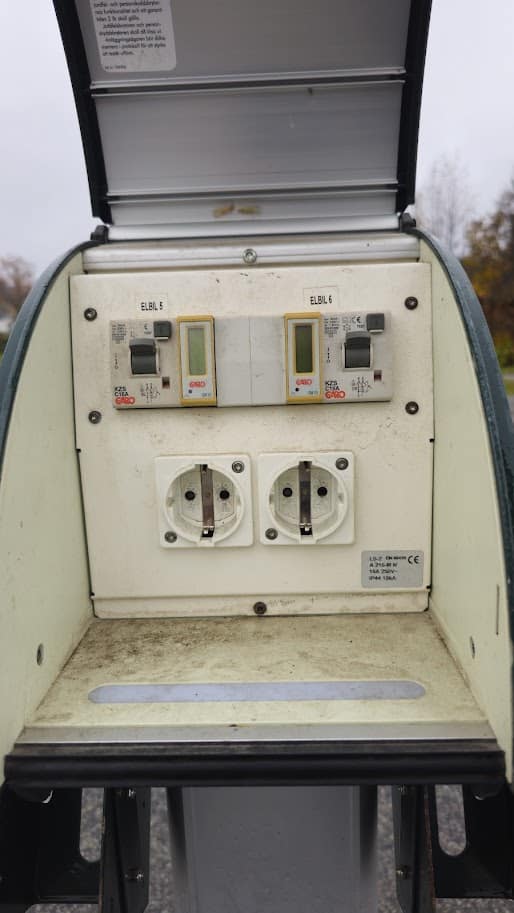
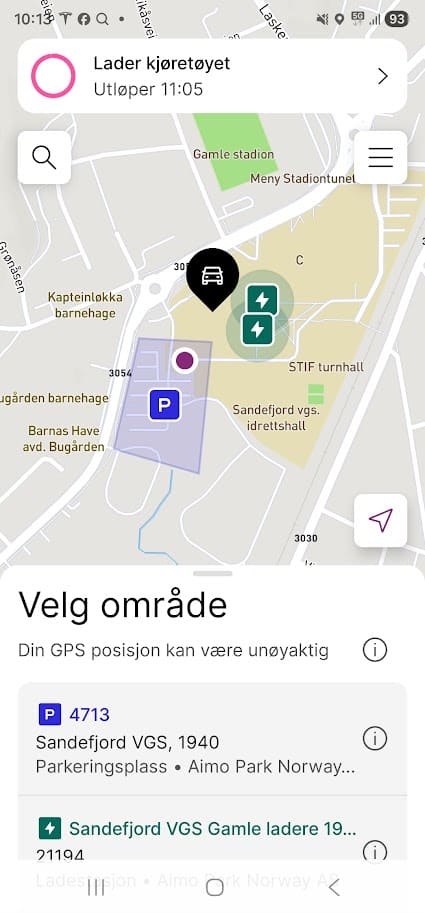
The correspondence: The emails that paint the profile
Berntsen contacted Aimo Park both as a private complainant and in editorial preparation for Nettsak. The correspondence shows:
- Signature practice: Emails are signed "Magnus S." (operations manager/lawyer), not a full name. Justified by "privacy and security".
- Processing track: The company treats the inquiry as a private complaint - even when it comes from Nettsak - and states a processing time of about six weeks.
- Lack of receipt: When submitting a complaint via the online form, no automatic confirmation/copy is sent to the complainant.
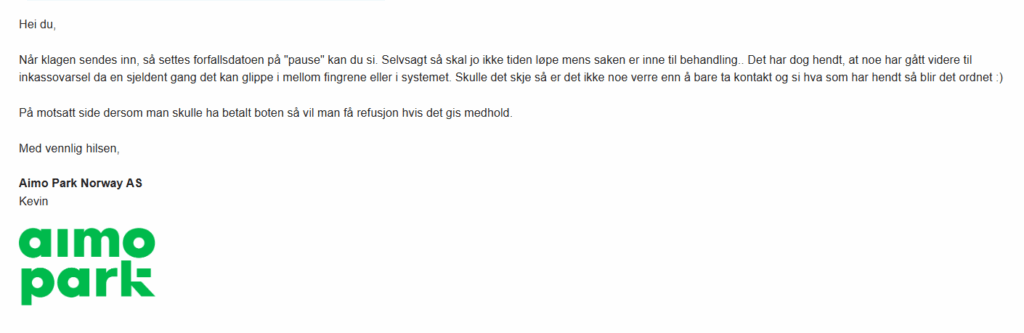
- Debt collection during a complaint: Customer service states that cases "may end up in debt collection" even while under review, and that this is "sorted out" if the customer gets in touch.
Anonymised signatures, the absence of a receipt/case access and the risk of debt collection during processing weaken verifiability and the consumer's position.
The regulations: What applies to complaint handling?
Even though Aimo Park is not a public authority, important principles apply correspondingly to those of public administration: proper case handling, equal treatment, the right to be heard, documentation and access to the file. For the private issuing of a control sanction, the Parking Regulations sections 44-45 are particularly relevant.
- Section 44: The right to complain when the penalty is presumed to be in breach of the regulations. The complaint is first handled by the company.
- Section 45: The case can be taken further to the Parking Complaints Board (free of charge for consumers).
The company must be able to document the basis for its decision (signage, road markings, time, technical status, the inspector's photos/notes and relevant terms). Without documentation that the equipment was working at the time of the inspection, the penalty stands on weak ground before the board.
Patterns in practice: What does the feedback say?
Nettsak has reviewed publicly available sources (Google reviews, Trustpilot, app reviews, media coverage, decisions by the Norwegian Consumer Authority) that together point to a pattern:
- Overwhelmingly negative reviews: 1.1/5 stars (266 Google reviews). Trustpilot around 1.4/5 with a clear majority of one-star ratings. App reviews describe technical faults and poor customer dialogue.
- Long processing times and lack of receipts: Several report that the complaint form does not provide email confirmation, and that responses are absent for weeks.
- Rejection at first instance - upheld later: Board practice shows that cases are often rejected by the companies and may later be upheld by the Parking Complaints Board.
- Technical failure without accountability: Cases of defective machines/charging points at the same time as fees are issued.
- Debt collection during processing: Customers experience a debt collection notice before the complaint has been fully processed.
The picture that emerges is a system where consumers are pressured to "pay and move on" because the time cost of complaining exceeds the fee, even when the basis is weak.
Consequences for the consumer and society
When the same company both issues the sanction and assesses the complaint, a built-in conflict of interest arises. The consumer is placed in a weak position, and the threshold for complaining rises. Cases that go to debt collection during processing reinforce the imbalance and can lead to a payment default mark before the merits of the case have been considered.
The effect on society is weakened trust in the parking system. When private operators exercise authority-like functions without corresponding transparency and a duty to document, due process is undermined.
What now - the specific case
The complaint handling at Aimo Park is ongoing. If the complaint is rejected, the case will be brought before the Parking Complaints Board. The following documentation is available:
- Photo documentation of the defective charging point (no power/indicators)
- Screenshots from EasyPark (attempt to charge with no registered consumption)
- Email correspondence with the complaints department/customer service
- Information about regular inspections in the area despite the fault at the charging point
Inquiries to the landowner and authorities
Nettsak has contacted Sandefjord upper secondary school and Vestfold county municipality as the landowner/party responsible for the facility regarding operation, maintenance and the handling of faults.
Possible precedent
If the complaint is upheld as a result of a malfunction in the charging facility, it could have significance for similar cases nationally.
How to complain - a practical guide
- Document on site: Photos of the car, signage, machines/charging point, lighting conditions and the time. Screenshots from the app when attempting to charge/pay.
- Submit a written complaint within 3 weeks: Use the form/email and keep a copy of everything. Save a screenshot proving the complaint was submitted when the system does not send a receipt.
- Demand access to the file: Ask for the inspector's photos/notes, the area description, the app log and the technical status.
- Don't let yourself be pressured by debt collection: Point out in writing that the complaint is under review. Debt collection before the merits are considered is improper.
- Take the case further: If the complaint is rejected, send it to the Parking Complaints Board (free of charge).
- Consider the matter of principle: Small amounts can have great significance for practice. Documented decisions can change routines.
Useful resources: The Parking Complaints Board, the Parking Regulations sections 44-45, the Consumer Council, the Norwegian Consumer Authority.
In closing
This is about more than one fine and one defective charging point. When private companies both issue and handle sanctions without genuine independence and without robust access to the file, the consumer's rights and trust in the system are weakened. Transparency, documentation and verifiability must be minimum requirements.
Do you have your own experiences?
Have you experienced something similar with Aimo Park Norway AS or other parking companies? Nettsak would like to hear from you. Send documentation/experiences to [email protected]. Inquiries are treated confidentially.
Further follow-up
Nettsak will follow Aimo Park's complaint handling, any board assessment and the response from the landowner/authority. Aimo Park Norway AS has been informed of the article and invited to provide a reply/comment. Any reply will be published unedited.
FACTS: Aimo Park Norway AS
- Organisation number: 946 359 106
- Address: Ole Deviks vei 6 C, 0666 Oslo
- Phone: 21 00 76 70
- Established: 1987
- Employees: 144
- Total operating income (2025): 899,432,000 NOK
- Profit before tax (2025): 40,968,000 NOK
- EBITDA (2025): 51,259,000 NOK
- Equity ratio: 30.1%
- Owner: Aimo Holding AB (100%)
- General manager: John Lien (b. 1969)
- Chair of the board: Hans Felix Junior Fuchs (b. 1987)
- Auditor: KPMG AS
- Source: The Brønnøysund Register Centre
Update 6 November 2025
After the publication of this story, Aimo Park Norway AS has apologised for the incident and offered to cancel the control sanction in question.
Håkon Berntsen (a party to the case) has personally chosen to decline the offer of immediate cancellation, and wishes the complaint to be processed further under the ordinary procedure, cf. the Parking Regulations section 44. The aim is to ensure full transparency and documentation of the process, and to avoid any doubt that media coverage may have influenced the outcome.
Any final decision from the complaint handling will be covered in a follow-up story.