Is it crookery - or just good business? How to use the company rules legally
Many small business owners and self-employed people think they are "up to crookery" if they put AirPods, a home office or a car on the company. In reality this is entirely...
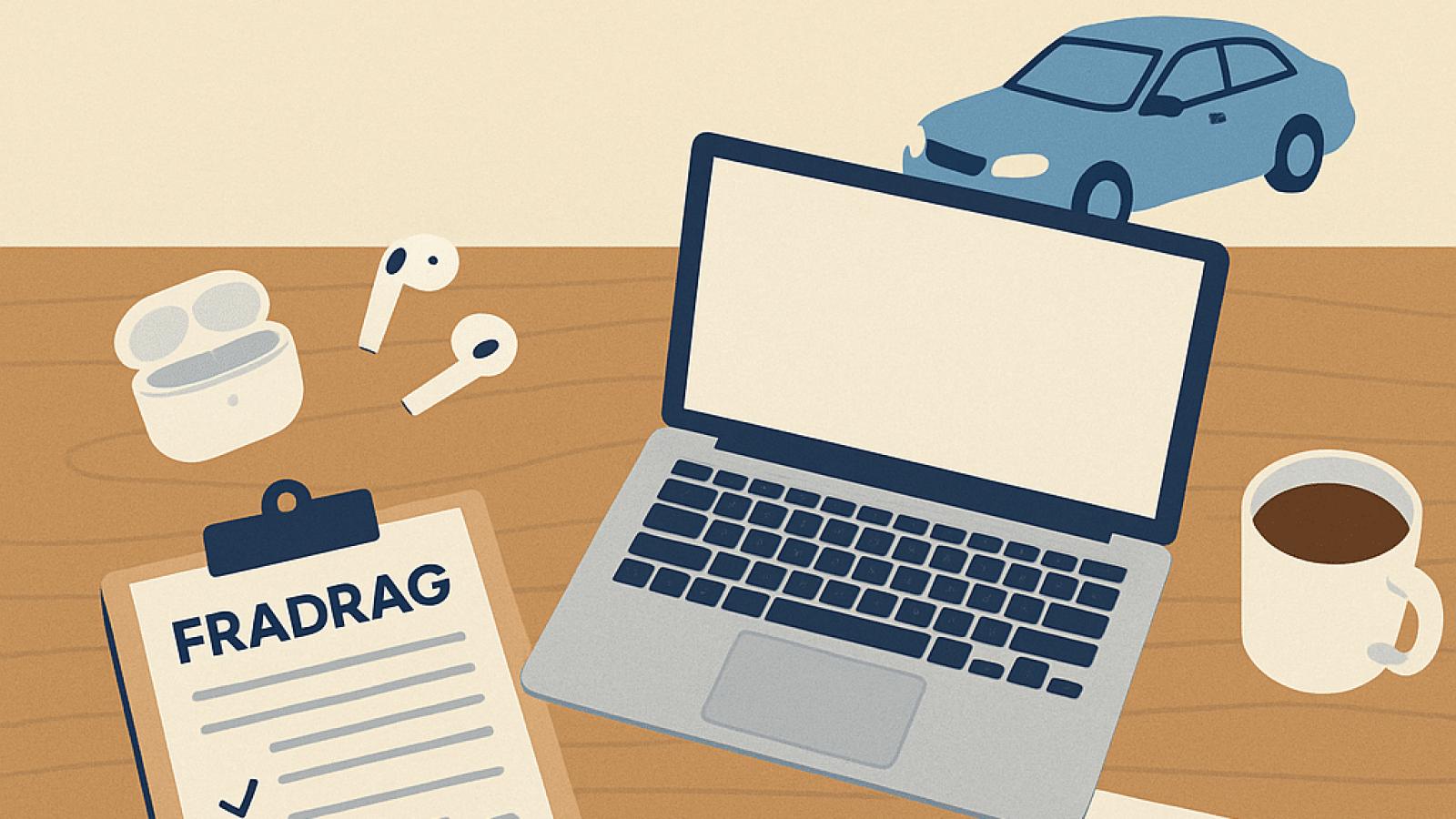
Many small business owners and self-employed people think they are "up to crookery" if they put AirPods, a home office or a car on the company. In reality this is entirely normal - and in fact intended by the legislator. Here is what is actually permitted, and how to use the system correctly - with concrete examples down to the last krone.
The tax system is made to help - not to cast suspicion
The Norwegian tax system is built on trust and reality: You should pay tax on what you actually earn, not on the money you have to spend in order to earn it. That is why business owners are allowed to deduct expenses that are necessary for operations.
That does not mean you should be "creative" - but nor should you be afraid to use the system as it is intended.
As the Norwegian Tax Administration itself writes:
"Costs incurred to acquire, maintain or secure income may be deducted."
In other words - anything that has a real connection to your business may be tax-deductible.
Example 1: Home office - from NOK 2,128 to NOK 15,000 in deductions
Many people do much of their work at home - meetings, planning, record-keeping, accounting and customer contact. In that case you can get a deduction for a home office.
You have two options:
- Standard deduction:
You enter a fixed amount of NOK 2,128 per year (2024). No documentation is required. - Actual deduction:
You calculate the actual costs based on the share of the home used for work.
If you have a 10 m² office in a 100 m² home, you can deduct 10% of rent, electricity, insurance and municipal charges.
Example:- Rent: NOK 150,000 per year
- 10% of this = NOK 15,000 in deductions
For a limited company it is also permitted to rent an office in your own home, but then you must draw up a genuine rental agreement.
The usual market rent for a small office in a home is around NOK 1,000-2,000 per month. The company gets a deduction, while you as a private individual must report the rental income - often tax-free if it is under NOK 10,000 per year.
Example 2: Car and driving - NOK 3.50 per kilometre
If you have a sole proprietorship and use your own car for customer visits, you can claim a mileage allowance of NOK 3.50 per km (2024 rate).
If you drive 5,000 km to customers in a year, you get a deduction of:
5,000 × 3.50 = NOK 17,500.
Use a logbook or an app to document the date, customer and purpose.
If you exceed 6,000 km per year for business use, the car is considered a business vehicle - in which case you can claim all costs (fuel, insurance, servicing), but must be taxed for the benefit of private use.
Example 3: AirPods, phone and equipment
You use a phone and headphones in patient contact, customer meetings or when invoicing.
A set of AirPods costing NOK 3,000 can be entered as an operating expense if they are used in the business.
If they are also used privately, you should claim 50% of the cost, i.e. NOK 1,500 as a deduction.
The same principle applies to PCs, tablets, mobile phones and software such as Teams, OneDrive and accounting systems.
Example 4: Clothes, shoes and exercise - where the line is drawn
A physiotherapist or trainer cannot claim ordinary running shoes or workout clothes, even if they are used at work.
But work clothing with a logo or clothing not suitable for private use (clinic uniform, protective equipment) is tax-deductible.
A doctor's coat costing NOK 600 - yes.
Nike running shoes costing NOK 1,200 - no.
Example 5: VAT - the difference between industries
This is where the biggest differences between industries appear.
- A consultant or electrician who is VAT-registered gets back 25% VAT on all purchases.
AirPods at NOK 3,000 = NOK 2,400 real cost. - A physiotherapist with a VAT exemption does not get the VAT back.
The same AirPods = NOK 3,000 cost.
VAT deductions only apply to businesses that themselves invoice with VAT.
For the health sector, education and finance, the services are exempt, and the VAT amount becomes part of the cost.
Common thresholds you should be aware of
| Type of deduction | Rate / limit (2024) | Documentation requirement |
|---|---|---|
| Home office, standard | NOK 2,128/year | None |
| Home office, actual | Share of costs | Must be used for work only |
| Mileage allowance | NOK 3.50/km (up to 6,000 km) | Logbook |
| AirPods, headset | Actual cost, split private/work | Invoice, purpose |
| Company rental of home office (limited company) | NOK 1,000-2,000/month usual market rent | Rental agreement |
| PC, mobile, licence | Actual cost | Receipt and use |
A system built on trust
Many Norwegians are reluctant to claim deductions - out of fear of making mistakes.
But the system is designed to be fair, not to punish.
Whereas an employee has an office, equipment, phone and car covered by their employer, the self-employed person has to pay for everything themselves - and therefore gets a deduction for the costs.
Using the system correctly is not cheating - it is sound business.
The Tax Administration itself emphasises that deductions are a normal part of doing business, as long as everything is documented and reasonable.
What you should not do
Even though the rules are flexible, there are limits.
The following is not accepted:
- Claiming clothes that are used privately.
- "Renting out" a room that is actually used as a bedroom.
- Claiming car costs without a logbook.
- Buying holiday equipment and calling it a "company investment".
Such things are classic mistakes that can lead to reassessment - and possibly additional tax.
Conclusion: This is the norm
Putting necessary expenses on the company is not "cheating the state" - it is using the system as it is intended.
The deduction rules allow small businesses to compete on equal terms with larger companies, and ensure that you as a self-employed person do not pay tax on expenses you need in order to do your job.
As long as you can document, explain and stand by the use - it is entirely legal.
Sources:
Skatteetaten, Regnskap Norge, Tripletex, DNB Nyheter, Lovdata