Robots have entered the warehouses – but the most impressive numbers do not hold up
New AI called VLA models has put humanoid robots into real operation in warehouses in 2026. But between 100,000 moved boxes and Tesla's unverified 50,000 robots lies a far more sober reality.
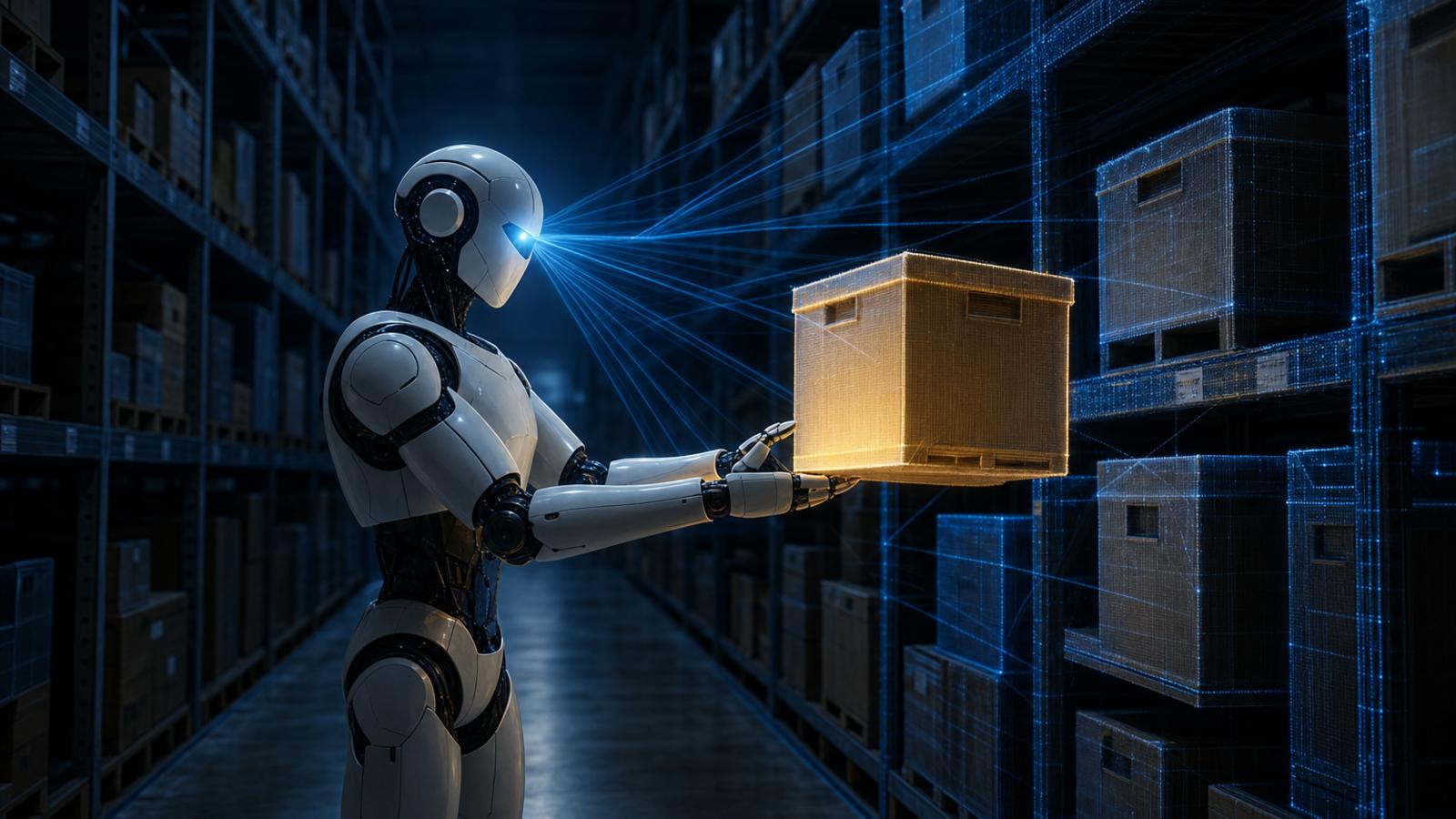
In 2026, humanoid robots have moved decisively from impressive demonstration videos to doing actual work in warehouses. Behind the breakthrough lies a new kind of artificial intelligence called VLA models – "vision-language-action" – which lets a robot see through a camera, understand an instruction in ordinary language, and control its own movements directly. It is the same recipe that made language models like ChatGPT possible, now transferred to physical machines.
But behind the big headlines hides a far more complex reality – where the most impressive numbers often have the weakest foundation.
What is actually deployed
The most verifiable results come from logistics: the company Agility Robotics states that its robot "Digit" has moved more than 100,000 tote boxes in a commercial deployment at logistics giant GXO. Figure AI reports more than 10,000 robots out at warehouse partners. In bounded tasks, in controlled environments, the robots are thus in real operation.
The market is growing accordingly: from 4.44 billion dollars in 2025, the sector is growing by around 39 percent a year, and investment has passed 6 billion dollars in just seven months.
The numbers that do not hold up to scrutiny
At the same time, much of what is presented is impossible to verify. Tesla is said to have "passed 50,000" of its Optimus robot, but the company has never published an audited figure, and Elon Musk admitted at an earnings call last year that the robot is "not in usage in a material way" in Tesla’s own factories. As far as is known, Optimus has zero external customers and zero verified, productive deployments.
The pattern is telling: the most impressive number has the worst foundation, while the most credible claim – boxes moved at a named customer – is the least glamorous.
The gap between lab and reality
The most important challenge is not how many robots are built, but how reliable they are. Industry figures show that a robot that solves a task correctly 95 percent of the time in the laboratory often drops to around 60 percent in real operation. And a robot that fails four times out of ten needs a human to supervise it – which undermines the whole point of automating. Value only comes when reliability becomes very high, and the general-purpose robots are not there yet.
Why robots do not simply follow the AI curve
Many compare robot development to the explosion of language models. But there is a crucial difference: language models were trained on enormous amounts of ready-made text from the internet. For physical movement there is no equivalent free trove of data – every hour of robot data must be painstakingly collected. That is precisely why access to training data, not the algorithms themselves, is considered the biggest bottleneck ahead.
The conclusion for 2026: humanoid robots are neither the imminent workforce the enthusiasts promise, nor the perpetual pipe dream the skeptics dismiss. It is a real technology crossing a real threshold – in a few, bounded use cases.