Ordinary WiFi can identify you with near-100% accuracy – without a camera or phone
German researchers have shown that ordinary WiFi can recognise a person within seconds – without a camera, without a device, even with the phone off. The researchers call it a privacy attack.
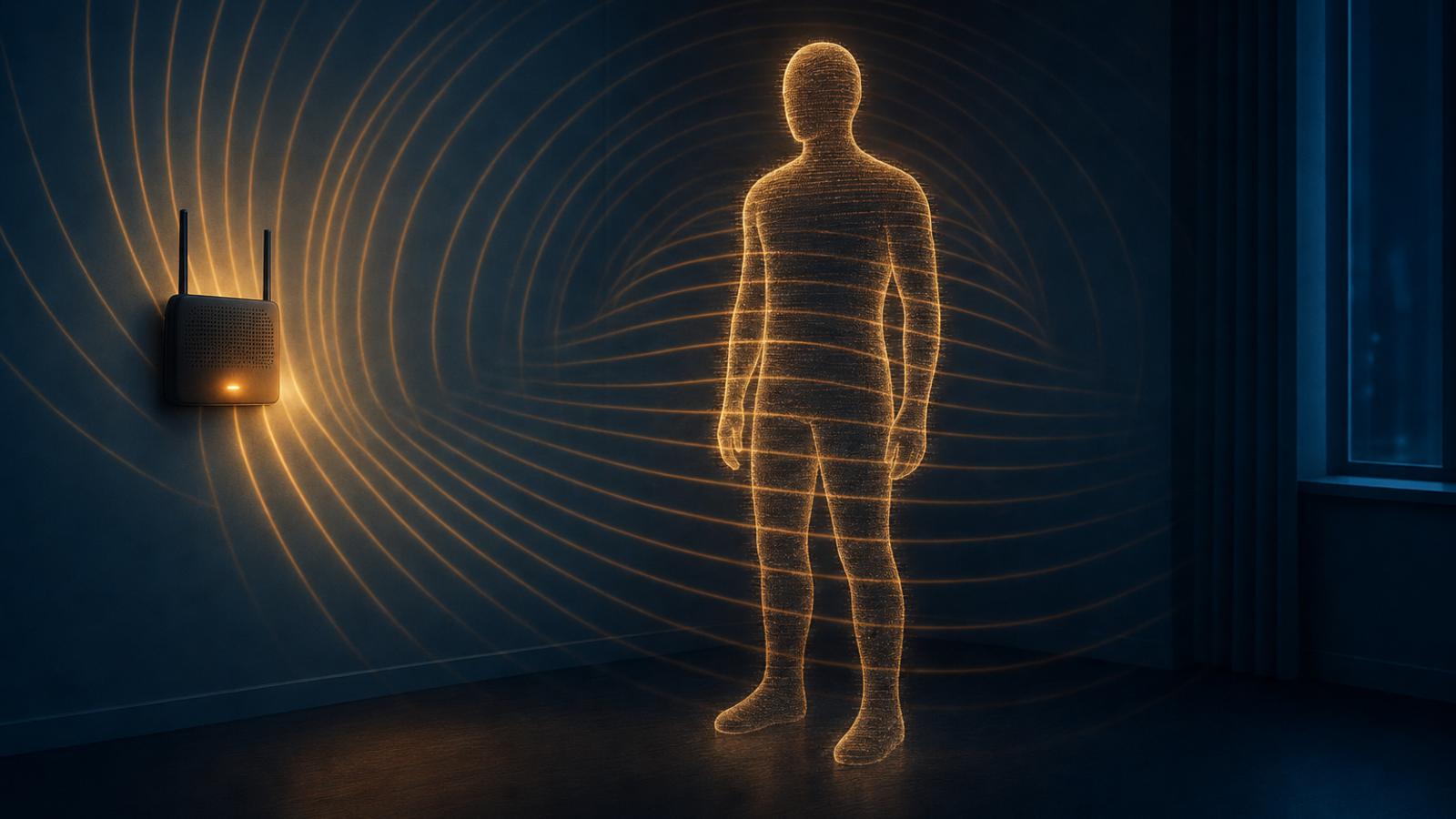
The old way to avoid being tracked was simple: leave your phone at home. New research makes that advice obsolete. Researchers at Germany’s Karlsruhe Institute of Technology (KIT) have shown that ordinary WiFi can identify a specific person with near-100 percent accuracy – without a camera, without the person carrying any device, and even with their phone switched off.
Your body disturbs the signal
The method rests on the fact that the human body, mostly water, reflects and disturbs radio waves in a way that is unique to each person – depending on size, shape and movement pattern. As WiFi signals fill a room, these disturbances form a kind of "radio fingerprint." By analysing the pattern with artificial intelligence, the system can recognise individuals within seconds.
In tests with 197 participants, the system identified people with near-perfect accuracy, from different angles and regardless of how they walked. What is striking is not that it is possible – researchers have shown that before – but that KIT managed it using the ordinary signal data that routers and devices already exchange during normal use. Previously, such identification required special sensors and advanced measurements. Now the barrier is dramatically lower.
"Every router becomes a possible surveillance tool"
The researchers describe the finding as turning "every router into a possible surveillance tool," and argue that identification via WiFi signals should be considered a privacy attack. What makes the technology especially challenging is that it is passive and invisible: you do not have to do anything, carry anything or consent to anything. It is enough that there is active WiFi equipment in the room.
Two sides of the same coin
At the same time, the technology has a clearly positive side. WiFi "sensing" can be used for fall alerts for elderly people living alone – without a camera in the bathroom – to measure room usage, and for intrusion detection without surveillance cameras. That is precisely why the technology is now being standardised (in the WiFi standard 802.11bf), so the sensing capability is built into future routers. The dilemma is that the same ability that catches a grandfather who falls can also be used to identify and track people without their knowledge.
Research for now – but a clear direction
It is worth stressing that this is still research carried out under controlled conditions, not something most routers do today. But all the technical obstacles that previously kept the technology in the laboratory – special equipment, complex measurements, dependence on carrying a device – have now fallen. The question is no longer whether the walls can "see" you, but who should be allowed to look – and whether we decide that before the capability sits in every ceiling.