The battery year 2026: why your phone suddenly has 7,000 mAh
The silicon-carbon battery went mainstream in 2026: 30–50% more power in the same space, up to 10,000 mAh in slim phones. China leads, the West lags – and the gain reaches further than longer battery life.
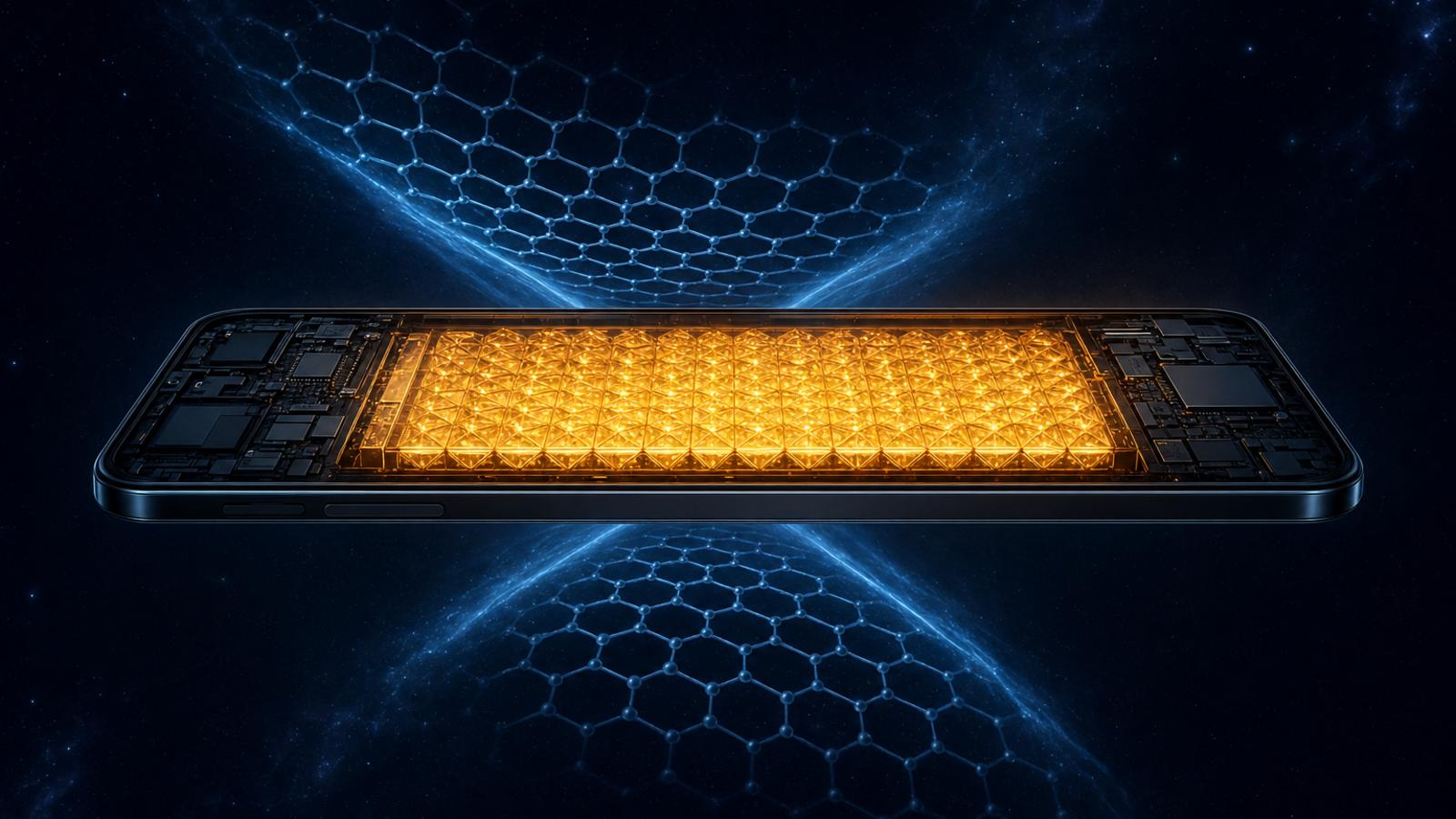
While the tech year 2026 has been about artificial intelligence, a quieter revolution has reached a tipping point in millions of pockets: this is the year the silicon-carbon battery went from niche to mainstream. New flagship phones now pack far more power into the same space – and some have crossed the symbolic 10,000 mAh mark in a phone thinner than a pencil is long.
From 5,000 to 7,000 mAh – with no thicker phone
Where last year’s flagships typically had 4,500–5,000 mAh, Chinese flagships from Xiaomi, OPPO, vivo, HONOR and OnePlus now routinely deliver 6,500–7,300 mAh in equally slim designs. HONOR’s Magic Win and Realme’s P4 Power have squeezed a battery of a full 10,001 mAh into a frame just 8.3 millimetres thick. In practice, that means phones lasting well beyond a working day on a single charge.
The secret is in the anode
Every phone battery stores power in a material called the anode. For 30 years that has been graphite. Silicon can store around ten times more energy per gram – but has one big problem: it swells sharply when charged, and pure silicon would crack apart after a few charges. The solution is to mix a moderate amount of silicon into a carbon structure that cushions the swelling. The result is an energy density of around 500–600 watt-hours per kilogram, versus 300–400 for conventional lithium-ion batteries – that is, 10–50 percent more power in the same space.
The flip side
The technology carries a trade-off rarely printed on the box: the more silicon a maker packs in, the higher the capacity – but also the faster the wear, because the swelling stresses the battery over time. A phone with a very high mAh figure may therefore lose capacity faster than a more conservatively built model. The industry has been here before; the same happened with fast charging before the technology matured. For consumers, the advice is to look at rated lifespan, not just peak capacity.
China leads, the West follows
The development is driven almost entirely by Chinese manufacturers. Western flagships are not expected to adopt silicon-carbon at scale until late 2026 at the earliest, most likely in 2027. Behind the visible brand lies a materials technology and manufacturing expertise increasingly concentrated in one region – the same pattern that has played out before for displays and modems.
Why it matters more than longer battery life
More energy in the same space is not just about charging less often. It also creates room for more advanced software – such as AI models running directly on the phone – to do more without draining the battery or overheating the device. That is precisely why a seemingly boring battery breakthrough may turn out to be one of the most important enablers of the next generation of mobile technology.