Juleøl 2026: 250-plus Christmas beers hit Vinmonopolet on 4 November – why they are dark, strong and age well
Vinmonopolet released more than 250 Christmas beers on Wednesday 4 November, and dark lager still sells best. Here is the malt chemistry behind the colour and strength, Norway's 4.7 per cent supermarket limit, food pairings and which beers age well.
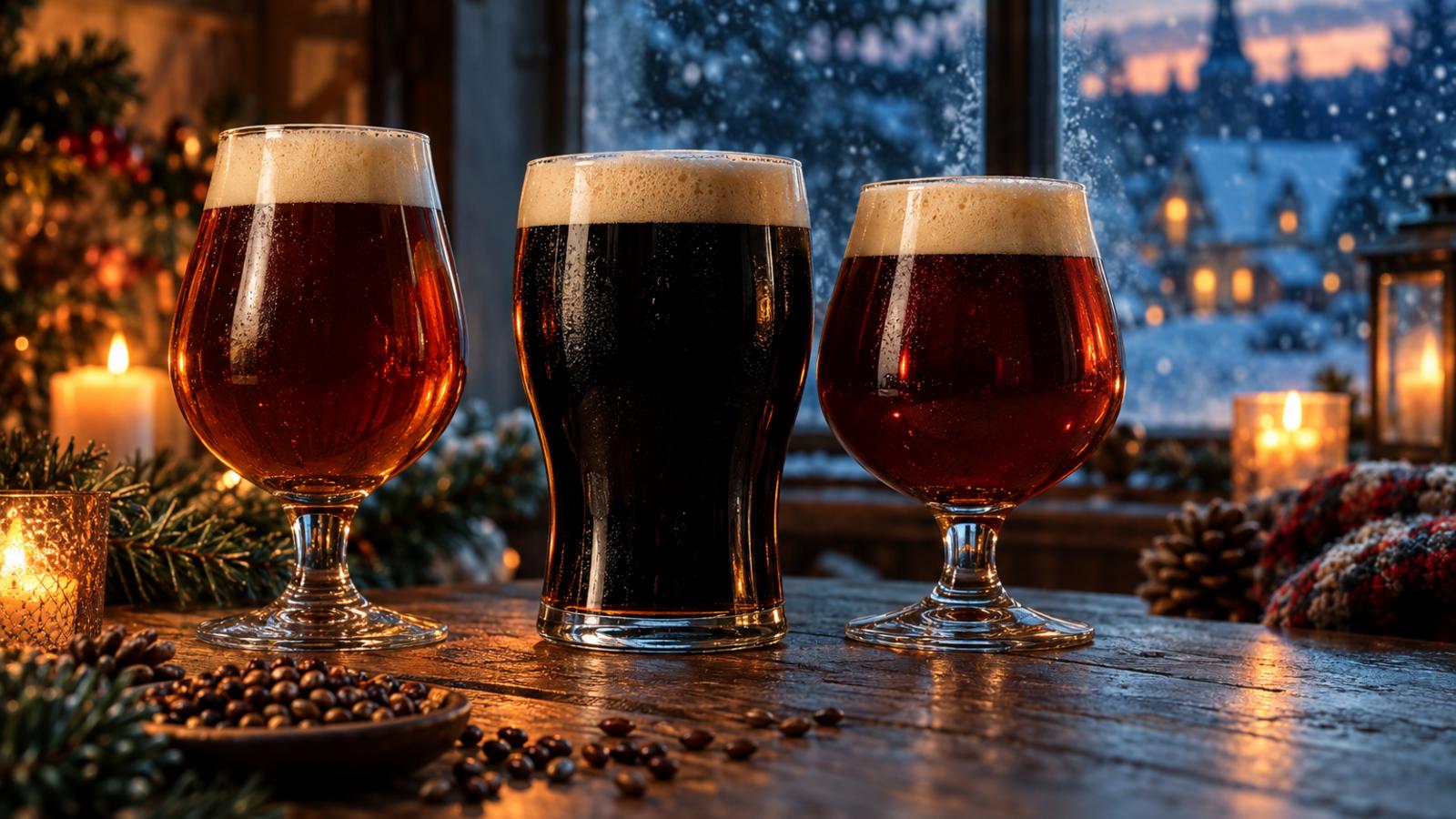
Juleøl is the Norwegian Christmas beer, and Vinmonopolet, the state-owned alcohol retailer, released more than 250 of them on Wednesday 4 November 2026. Dark lager remains the best-selling style. Juleøl tends to be darker and stronger than everyday beer because it is brewed with more malt – more sugar means more alcohol – and because hot-kilned, roasted malt turns brown through the Maillard reaction.
Plenty of Norwegian outlets have run taste tests. We looked instead at the chemistry in the glass, the rules on where you can buy it and what Vinmonopolet itself recommends with the classic Christmas dishes.
Key facts: juleøl 2026
- Release: Wednesday 4 November 2026, more than 250 Christmas beers at Vinmonopolet. Shops stock different ranges, but the beers can also be ordered online.
- Best seller: dark lager, according to Vinmonopolet.
- Supermarket limit: 4.7 per cent alcohol by volume. Anything stronger is sold only by Vinmonopolet (Alcohol Act, section 3-1).
- With Christmas dinner: Vinmonopolet recommends beers of up to 8 per cent with no additions other than hops.
- Ageing: the strongest styles keep for several years if stored somewhere dark and cool.
- Tradition: Norwegians have brewed Christmas beer for more than 1,500 years, Vinmonopolet says.
What arrived at Vinmonopolet on 4 November?
According to Vinmonopolet's guide to juleøl (last updated 6 October 2026), the monopoly launched more than 250 Christmas beers alongside its regular new-product release on 4 November. Individual shops carry a range tailored to local demand.
The spread is wide: dark lager, doppelbock, red and brown ales, IPA, abbey-style beers, porter and stout, sweet “pastry stouts”, barley wine, barrel-aged beer and alcohol-free juleøl. Breweries founded before 2000 mostly make dark lager, while younger breweries lean towards dark ales – “although dark lagers still sell the most”, Vinmonopolet writes.
Twenty years ago, Norwegian Christmas beer was “dark lagers of between 4.5 and 7 per cent”, according to Vinmonopolet. The Norwegian encyclopaedia Store norske leksikon (SNL) says traditional juleøl today is dark and full-bodied, “often” between 7 and 10 per cent.
Why is Christmas beer stronger than ordinary beer?
Juleøl is stronger because the brewer uses more malt per litre. Malt is barley that has been allowed to sprout and then dried in a kiln. During mashing, enzymes convert the starch into sugars, and yeast then turns sugars such as maltose into ethanol and carbon dioxide, as John Sheppard, professor of bioprocessing at North Carolina State University, explained to Phys.org in December 2015.
The rule of thumb follows: more malt means more sugar in the wort, and more sugar means more alcohol. The doppelbock style guideline from the Beer Judge Certification Program (BJCP, 2021) shows it neatly. Original gravity – the sugar content before fermentation – is 1.072–1.112, and the finished beer is 7–10 per cent ABV.
The BJCP calls doppelbock “a strong, rich, and very malty German lager”, first brewed by monks in Munich by the 1700s. Sheppard notes that brewers use dedicated yeast strains for such “high gravity” beers of 7–10 per cent.
Why is juleøl so dark?
The colour comes from how hot the malt was kilned or roasted, not from the alcohol. A review in Frontiers in Nutrition (Sharma et al., September 2021) finds that kilning and roasting contribute most to a beer's colour and flavour.
- Pale malt is kilned at 80–85 °C.
- Caramel malt is heated to around 160 °C.
- Roasted malt is treated at 220–250 °C for 2–2.5 hours.
The Maillard reaction is a reaction between sugars and amino acids under heat. Its end products are melanoidins – large, brown molecules formed at several stages of brewing, according to the Frontiers review. Dark-roasted malt brings notes of caramel, coffee, chocolate and dried fruit, SNL writes. We have previously explained the starch physics behind a smooth cacio e pepe; in beer, malt chemistry does the same job.
Dark does not automatically mean strong, though. The BJCP also describes pale doppelbocks, and a dark porter can be light. The amount of malt sets the strength; the roasting sets the colour.
How strong can supermarket beer be in Norway?
Norway's Alcohol Act sorts drinks into groups. Group 1 covers drinks above 2.5 and up to 4.7 per cent alcohol by volume, which grocery shops can sell with a municipal licence. Anything above 4.7 per cent falls into group 2 or 3 and, under section 3-1, can be sold only by Vinmonopolet.
- Shop opening hours for beer (section 3-7): 08:00–18:00, and 08:00–15:00 on the day before a Sunday or public holiday. Municipalities may extend this to 20:00 on weekdays and 18:00 before holidays – or shorten it.
- Christmas Eve is the day before a public holiday, so the default is that beer sales stop at 15:00, or 18:00 where the municipality allows.
- Age limit (section 1-5): 18 for beer in groups 1 and 2 and for low-alcohol drinks (0.7–2.5 per cent). Alcohol-free beer under 0.7 per cent has no legal age limit.
What a bottle amounts to depends on its strength. The Norwegian Directorate of Health defines one alcohol unit as 15 ml of pure alcohol, equal to 33 cl of 4.5 per cent beer. Our calculation: 33 cl of a 9 per cent juleøl contains 29.7 ml of pure alcohol, almost 2 units. A half-litre of 4.7 per cent supermarket juleøl contains 23.5 ml, about 1.6 units.
Which juleøl goes with ribbe, pinnekjøtt and lutefisk?
Vinmonopolet's advice for the classic Norwegian Christmas dinners – pork belly (ribbe), salted lamb ribs (pinnekjøtt), lutefisk and nut roast – is a juleøl of up to 8 per cent with no additions other than hops. Dark lager and dark ale both work. If aquavit is on the table too, it suggests a refreshing beer with less alcohol.
- Caramel pudding and cloudberry cream: doppelbock or barley wine, with more sweetness and alcohol.
- Rice cream (riskrem): a fruited beer.
- Cakes, sweets and blue cheese: pastry stout, spiced Christmas beer, barrel-aged imperial stout or barley wine.
SNL explains the logic: sweet, malty Christmas beers balance the salt and fat of ribbe and pinnekjøtt, while paler or spiced versions contrast with lutefisk and rakfisk.
Does juleøl age well?
The strongest Christmas beers can be kept for several years if the bottles are stored somewhere dark and cool, Vinmonopolet says. The flavour changes as they age, picking up more dried fruit and nuts.
The science is more cautious. A KU Leuven review in Food Chemistry (2006) notes that, unlike some wines, beer ageing is usually considered bad for flavour, largely because fatty compounds oxidise and produce a cardboard taste. Over time bitterness fades and caramel and toffee aromas appear. One study cited by the authors found that an aged strong ale developed burnt, caramel and liquorice notes – without the cardboard.
Beer type, oxygen and storage temperature decide the outcome. The practical advice: cellar barley wine, imperial stout and doppelbock, and drink hoppy, pale and alcohol-free juleøl while it is fresh. Similar chemistry – oxidation and warmth – also governs how long a carved pumpkin lasts.
Are Norwegians drinking less beer?
According to Statistics Norway (SSB), 257.5 million litres of beer were sold in Norway in 2025, down 1.3 per cent on the year before. Vinmonopolet bucks the trend: it sold around 3.9 million litres of beer in 2025, up 5.5 per cent, and sales of alcohol-free products hit a record of just under 1.5 million litres, according to Vinmonopolet's sales figures. Neither source breaks out Christmas beer. SSB's next update is due on 2 December 2026.
More food science and seasonal stories are in our Food & Drink section.
Frequently asked questions
What is juleøl and when was it released in Norway in 2026?
Juleøl is Norwegian Christmas beer, traditionally dark and malty. Vinmonopolet released more than 250 varieties on Wednesday 4 November 2026.
Why is Christmas beer darker and stronger than regular beer?
More malt gives more sugar for the yeast to turn into alcohol. The colour comes from malt kilned or roasted at high temperatures, where the Maillard reaction forms brown melanoidins.
How strong can beer sold in Norwegian supermarkets be?
No more than 4.7 per cent alcohol by volume. Stronger beer can only be sold by Vinmonopolet under section 3-1 of the Alcohol Act.
How long can you keep juleøl?
The strongest styles keep for several years somewhere dark and cool, according to Vinmonopolet. Pale, hoppy and alcohol-free beers are best drunk fresh.
Which Christmas beer goes with ribbe and pinnekjøtt?
Vinmonopolet recommends a dark lager or dark ale of up to 8 per cent with no additions other than hops.