Halloween pumpkins: Norway imported 1,155 tonnes last year – how to keep your lantern fresh until Saturday
A carved pumpkin lasts seven to ten days – less with warmth, damp and a candle inside. We explain why lanterns rot, what actually helps, and what Statistics Norway’s figures show: 457 of last year’s 1,155 tonnes of imports arrived in October.
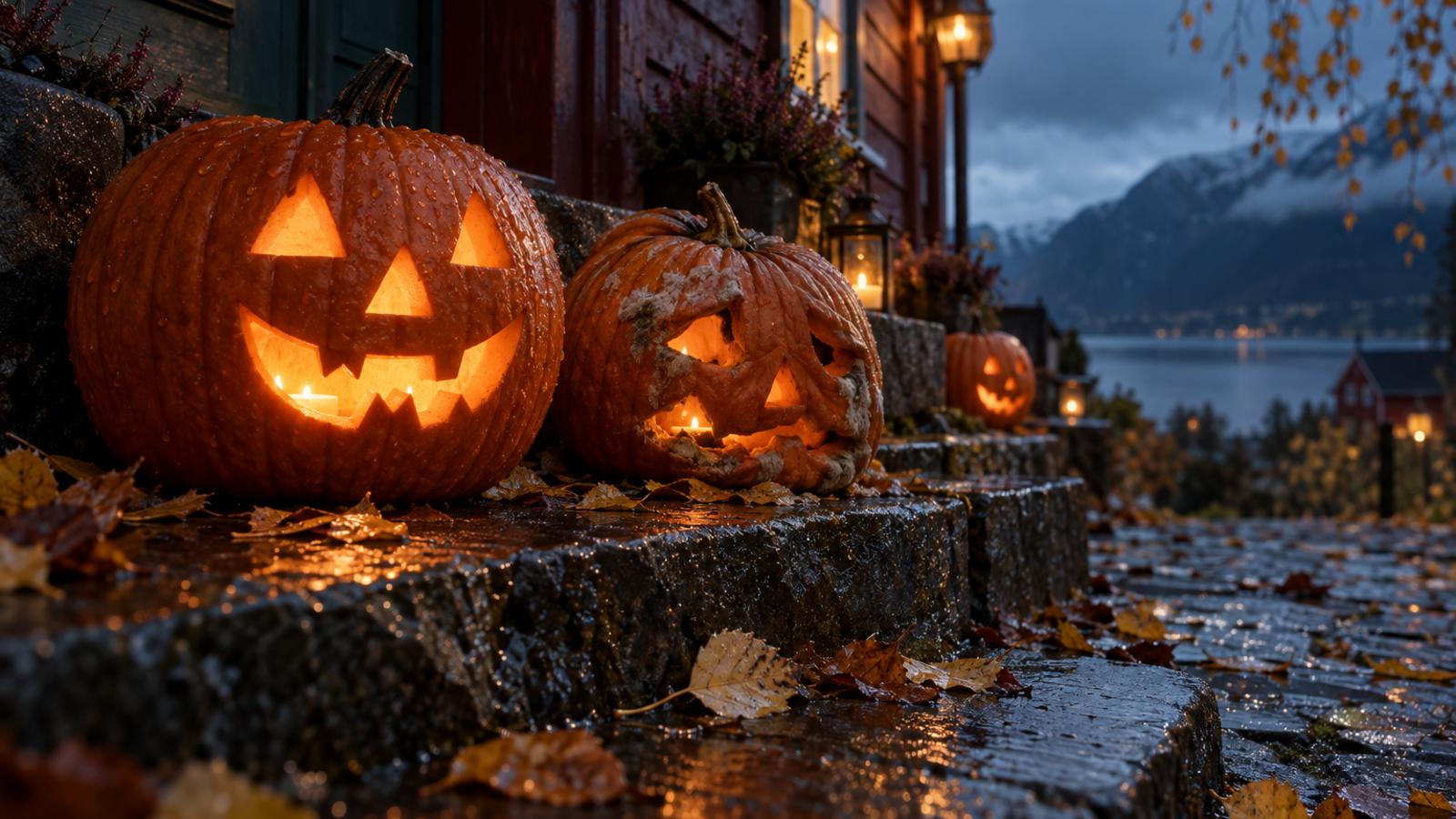
A carved pumpkin usually lasts seven to ten days, according to University of Illinois Extension – less in mild, damp weather or with a candle burning inside. Carve it on Thursday or Friday and it will easily last until Halloween on Saturday 31 October. Norway imported 1,155 tonnes of pumpkins in 2025, 457 tonnes of them in October.
- Carved pumpkin: seven to ten days, depending on the weather (Illinois Extension, 2020).
- Whole pumpkin: several months somewhere dry and cool at 10–16°C (OFG).
- Imports in 2025: 1,155 tonnes worth NOK 17.7 million – the most since pumpkins got their own trade code in 2012.
- The October spike: 457 tonnes in October 2025, 40 per cent of the year’s total.
- 2026 so far: 736 tonnes from January to September, up 27 per cent.
How long does a carved pumpkin last?
“A pumpkin cut for Halloween will last seven to 10 days depending on weather conditions,” wrote horticulture educator Ron Wolford of Illinois Extension on 30 September 2020. Candles are best avoided, he added, because their heat cooks the flesh.
That is a rough guide. Utah State University Extension warned in 2019 that a lantern can start to rot “often just a few days later”.
An uncut pumpkin is a different matter. It keeps for months at 10–16°C and can sit on the doorstep for a while before you hollow it out, says Opplysningskontoret for frukt og grønt (OFG), Norway’s produce information office.
Why does a jack-o’-lantern rot so quickly?
A pumpkin is mostly water. The official Norwegian food database Matvaretabellen, lists raw pumpkin at 89 grams of water per 100 grams. Once the skin is cut, the edges dry out and the moist flesh invites mould.
Carving “exposes the insides, making it more susceptible to infection through air flow,” wrote Nick Volesky of Utah State University Extension. He named four common culprits – Cladosporium, Penicillium, Aspergillus and Alternaria – all spread by airborne spores.
South Dakota State University Extension (2023) recommends 10–16°C and 50–70 per cent relative humidity for whole pumpkins: damper air lets disease in, drier air makes them shrivel, and below about 7°C they become sensitive to cold.
Decay under a soft spot “will go deeper and show up again later,” wrote Richard Hentschel of Illinois Extension on 12 October 2020.
How to stop your pumpkin rotting before Halloween
- Pick a sound pumpkin with no soft spots, holes or cuts.
- Wash it in warm water, let it dry, and use clean knives and spoons.
- Scrape out all the insides. Less moist surface means less for mould to feed on.
- Coat the cut edges with petroleum jelly. Both Illinois and Utah recommend it: it locks in moisture and slows drying.
- Use an LED or battery light. If you stick with a tealight, OFG suggests trimming extra flesh from the lid or cutting a small chimney so the lid doesn’t scorch.
- Keep it cool and dry, sheltered from rain and frost.
Does bleach help – and what about vinegar?
Utah State University Extension suggests dipping or spraying the finished carving with a 10 per cent bleach solution – one part household bleach to nine parts water. Wear gloves and don’t eat a pumpkin treated this way.
We found no expert source showing that vinegar works. Never mix bleach and vinegar: according to the Norwegian Poison Information Centre on Helsenorge, chlorine gas can form when sodium hypochlorite is mixed with acids.
How many pumpkins does Norway import for Halloween?
According to Statistics Norway’s external trade data (table 08801), Norway imported 813 tonnes of fresh pumpkins in 2023, 957 tonnes in 2024 and 1,155 tonnes in 2025. By our calculation, that is 42 per cent more by weight and 19 per cent more by value (NOK 14.9 million to NOK 17.7 million) in two years.
Growth has been uneven – 2021 reached 1,110 tonnes – but 2025 is the peak since 2012, when imports were just 229 tonnes.
The figures cover all fresh pumpkins, including butternut and other eating squash imported year-round. The Halloween effect shows up in October. Monthly data (table 08799) record 457 tonnes in October 2025 – 40 per cent of the whole year – against 297 tonnes in October 2024 and 151 tonnes in October 2023.
Where do the pumpkins come from?
In October 2025, 188 tonnes were registered from Sweden, 128 tonnes from the Netherlands, 53 tonnes from Spain and 44 tonnes from Denmark. Statistics Norway records the trading country, so a pumpkin “from Sweden” was not necessarily grown there.
October’s customs value was about NOK 11.3 per kilo, against NOK 15.3 for the year – not shop prices, but consistent with a month dominated by big, heavy decorative pumpkins.
Some ten Norwegian growers also produce around 1,600 tonnes a year for sale, according to OFG.
What next for this year’s pumpkin imports?
As of October 2026, the trend points up again. Imports from January to September reached 736 tonnes, against 579 tonnes a year earlier; September alone was up 40 per cent. Whether Halloween 2026 beats last October will be clear when Statistics Norway publishes October figures in November.
Can you eat your Halloween pumpkin?
Yes – the flesh. OFG separates eating varieties such as butternut and Hokkaido from decorative pumpkins. Halloween pumpkins are grown for display, but their flesh can be cooked. The small, warty ornamental gourds are for looking at only.
Use the flesh on the day you carve. The Norwegian Food Safety Authority (Mattilsynet) advises throwing away soft vegetables that have started to go mouldy or rotten, because mould threads can reach deep inside and mycotoxins survive cooking.
Since the clocks went back on 25 October, it gets dark early, so your lantern has plenty of time to shine. For more food science, see our Food & Drink section, and read how the world’s crops are safeguarded in our story on the Svalbard Global Seed Vault.
Frequently asked questions
How long does a carved pumpkin last?
Usually seven to ten days, according to Illinois Extension. Warmth, damp air and a lit candle can cut that to a few days.
When should I carve my pumpkin for Halloween?
With Halloween on Saturday 31 October, Thursday or Friday is a safe choice.
How many pumpkins does Norway import for Halloween?
Norway imported 457 tonnes in October 2025 – 40 per cent of that year’s total of 1,155 tonnes, according to Statistics Norway.
How do I stop my jack-o’-lantern rotting?
Wash it, scrape out the insides, coat the cuts with petroleum jelly, use an LED light and keep it cool.