Svalbard Global Seed Vault passes 1.4 million samples
On 17 June the Svalbard Global Seed Vault opened its doors for the second time this year. When the work was done, the Arctic vault had passed 1.4 million seed samples – and for the first time, Burkina Faso and Niger sent seeds to the mountain.
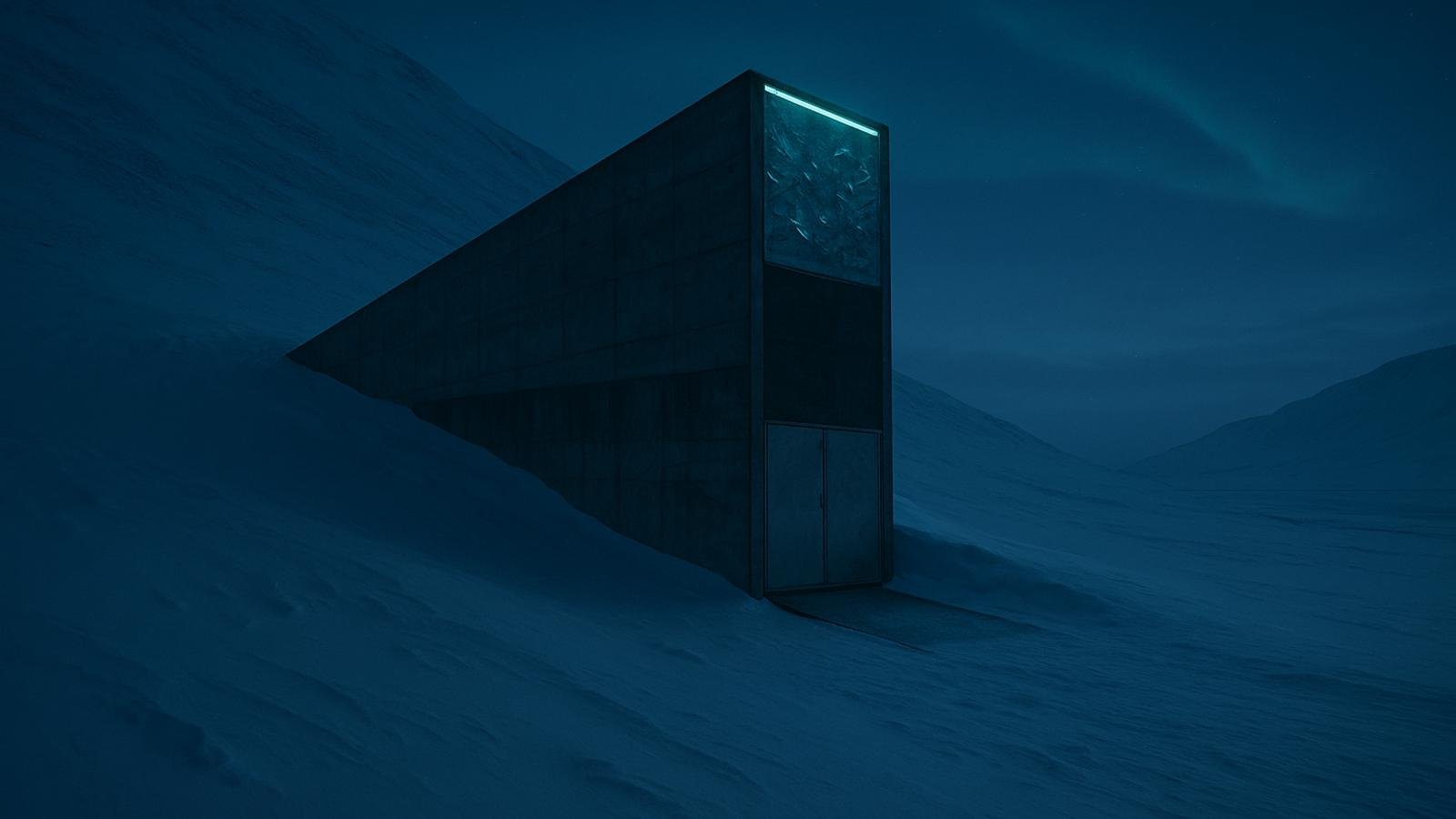
Deep inside a mountain on Spitsbergen, more than 120 metres into the permafrost and barely a thousand kilometres from the North Pole, lies what may be humanity's most important backup. On 17 June 2026 the Svalbard Global Seed Vault opened its doors for the second time this year, and once the final boxes were stacked in place, the Arctic facility held 1,401,285 seed samples. Passing 1.4 million samples is far more than a round number. It is a measure of how unsettled the world has become.
The vault is an insurance policy. Behind the narrow concrete portal jutting out of the mountainside sit copies of seed collections from gene banks all over the planet – a reserve meant to survive war, natural disaster, power failure and a shifting climate. The faster the vault fills, the clearer it becomes that the world's gene banks want a safety net.
15,000 new samples in the 70th deposit
June's deposit was the 70th since the vault opened in 2008. In total, 15,387 new seed samples from eleven gene banks were carried into the mountain. The largest shipments came from South Korea's Rural Development Administration, which deposited 6,000 samples of 50 species – cereals, vegetables and legumes – and from the John Innes Centre in Norwich, which lodged the entire UK national oat collection of around 2,600 varieties, along with nearly a thousand barley landraces and a range of wheat varieties. Gene banks in Morocco and Poland each contributed more than a thousand samples too. Taken together, it is biological heritage from four corners of the world, packed into 32 boxes.
Burkina Faso and Niger arrive for the first time
The most striking part, though, was two newcomers. Burkina Faso and Niger deposited seeds at Svalbard for the very first time – 370 and 204 samples respectively – with support from the benefit-sharing fund under the International Plant Treaty. That two of the Sahel's most drought- and conflict-exposed countries are now safeguarding their own agricultural foundation in Norwegian permafrost says something about who the vault is really for. It is not the great powers that need a last line of defence most, but the countries where a single drought or a single coup can erase generations of crop knowledge.
"Effective multilateralism can deliver tangible results for food security," said Álvaro Toledo, deputy secretary of the Plant Treaty, in connection with the deposit.
Why is the vault filling up now?
The answer lies in a world under pressure. Climate change is shifting growing zones and leaving crops more vulnerable to heat, drought and new diseases. Armed conflict threatens gene banks directly. And industrial agriculture has already erased a large share of the biological diversity in our food plants – some estimates suggest that roughly three-quarters of the variation in cultivated crops disappeared over the last century. The seed diversity stored at Svalbard is precisely the raw material scientists need to breed varieties that can withstand a harsher future.
"Crop diversity conserved in the Svalbard Global Seed Vault is the foundation for agriculture of tomorrow," says Stefan Schmitz, executive director of the international Crop Trust.
Lene Krøl Andersen, executive director of the Nordic Genetic Resource Center (NordGen), says the June deposit "demonstrates the continued importance of the Seed Vault and strong international commitment."
An insurance policy that has already paid out
That the vault is not merely symbolic was proven in 2015. That year the research centre ICARDA became the first ever to withdraw seeds from Svalbard, after the civil war in Syria had made its large gene bank in Aleppo inaccessible. The seeds were used to rebuild the collections in Morocco and Lebanon – and in this year's deposit, ICARDA, now based in Morocco, was once again among the donors with more than a thousand samples. The circle is complete: withdrawal, rebuilding and a fresh backup. That is exactly how the vault is meant to work.
Norway as the guardian of seeds
The vault is owned and legally administered by the Norwegian state, operated by NordGen and financed in large part by the Crop Trust. The facility opened in February 2008 and is designed to hold up to 4.5 million seed samples at minus 18 degrees Celsius. With 1.4 million samples, the vault is therefore about a third full – ample room for the diversity of generations to come.
The role of seed guardian fits into a bigger picture. Norway is becoming a place where the world stores its critical infrastructure, from data to DNA. The debate over whether Norwegian hydropower should run the world's data centres is, at bottom, about the same thing: cold, stable geography as a global resource.
A store against an uncertain future
There is something paradoxical about the image. One of the world's most remote structures, half-buried in ice, is at the same time one of its most optimistic. Every box carried into the mountain is a bet that there is a future in which the seeds will be needed. Just as the great projects of the space year are about securing humanity's place in the universe, the seed vault is about securing the most down-to-earth thing of all: the food on the plate. Passing 1.4 million samples is therefore no finish line, but a reminder that the work of preserving diversity is never done.
Norway's public broadcaster NRK reported the milestone, while the full figures have been published by the Crop Trust and the seed vault itself.