More than 2,000 robotaxis roll into Europe – with Chinese technology under the hood
Uber and China's Pony.ai expand to five European cities. American app, Chinese self-driving, local operators – and European authorities that have not yet decided where they stand.
Driverless taxis are becoming part of the European cityscape. On August 14, American company Uber and the Chinese self-driving firm Pony.ai announced they are expanding their partnership to put more than 2,000 robotaxis on the road in five European cities. The expansion builds on the service the companies launched in Zagreb in March, which was Europe’s first commercial robotaxi offering.
Five cities – but only one is known
For now, only Zagreb has been made public. The four other cities will be announced in phases, and each rollout requires its own approvals from national and local authorities. In Zagreb, the Croatian mobility company Verne owns and operates the cars, while Uber provides the app and the customers and Pony.ai provides the self-driving technology. The partnership between Uber and Pony.ai dates back to May 2025, and the companies are also planning a rollout in the Middle East.
Chinese technology on European roads
A recurring feature of Uber’s European robotaxi push is that the self-driving technology is largely Chinese. Alongside Pony.ai, Uber partners with the Chinese companies Momenta and WeRide, as well as British Wayve. Uber, in other words, does not own the technology itself, but acts as the gateway – the platform that reaches the customers – while the technological solutions in several cases come from China.
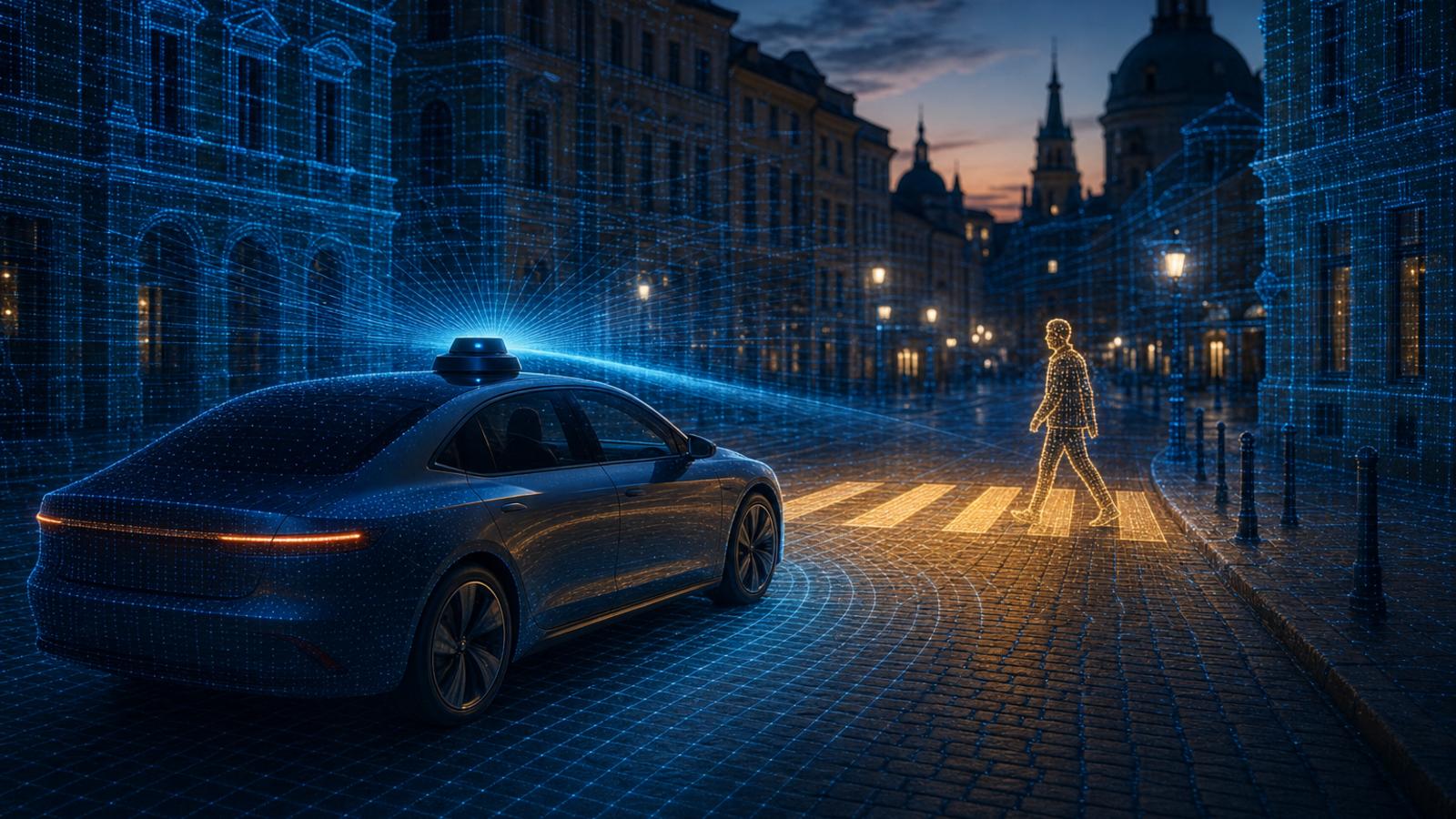
That raises questions many expect European authorities to take up: a robotaxi is a rolling sensor platform that continuously maps streets, buildings and people. Who stores and controls that data, and who could in principle command a fleet of thousands of cars, becomes a security question as well as a transport one.
Still an early phase
The figure of "more than 2,000 cars" is a plan, not an installed reality. Several of Uber’s European robotaxi projects still run with a safety driver behind the wheel, and projects in cities such as Munich were announced subject to regulatory approval. The gap between a signed agreement and a car safely handling a chaotic city intersection in the rain is still large.
Even so, the announcement marks a turning point: after years of testing, commercial driverless taxis are now a reality on European roads – and the competition over which cities, and which technology, will dominate is under way.
Is it coming to Norway?
No Norwegian cities are mentioned. The rollout starts in larger European metropolises with established rules for self-driving, a framework Norway currently lacks for large-scale commercial operation. But once the technology is established elsewhere on the continent, it is considered a question of time before it reaches the Nordics too.