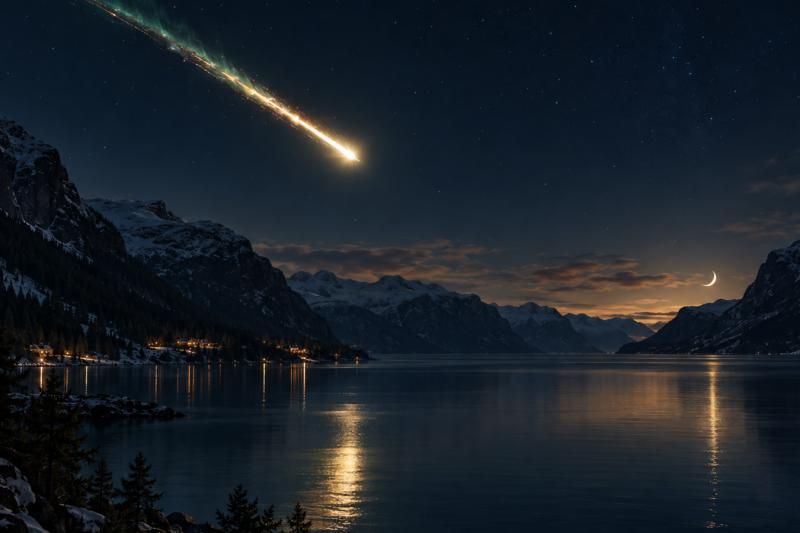
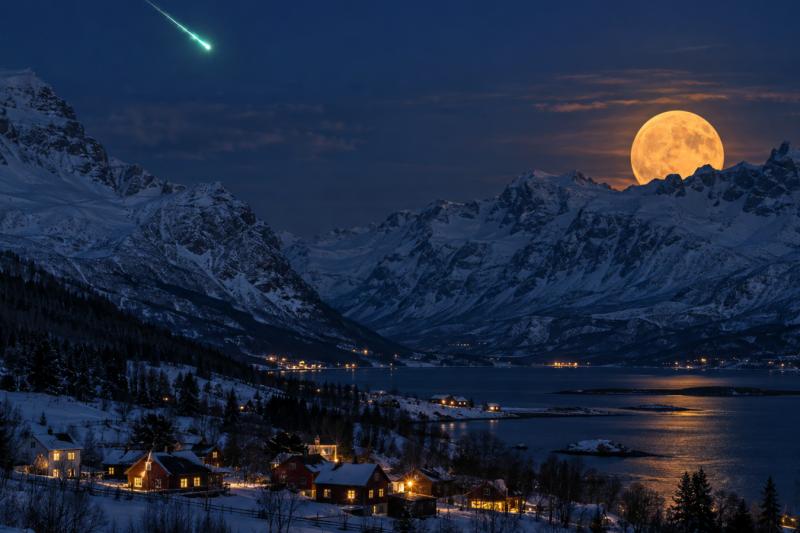
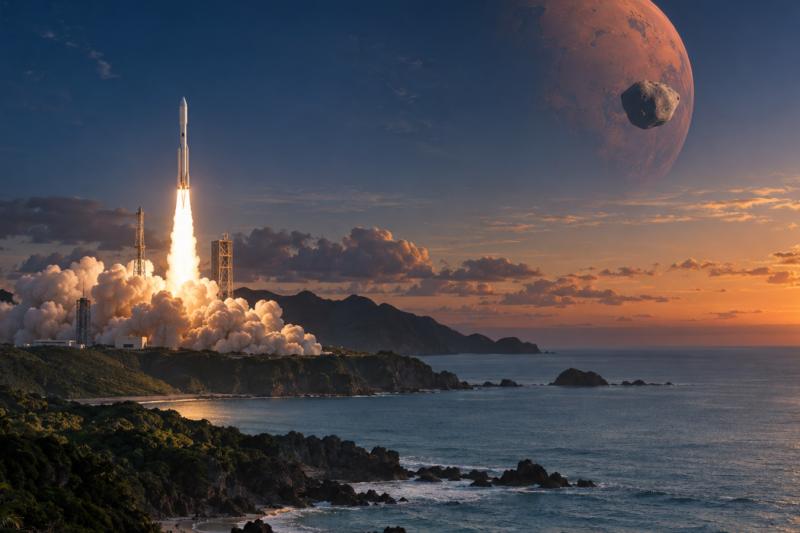
Leonid meteor shower 2026 peaks overnight on 17–18 November: moonset 23:20 – and Tromsø loses the sun on 27 November
The IMO puts the Leonid peak at 00:45 on Wednesday morning, with up to 10–15 meteors an hour under dark skies, and the moon sets first in every major Norwegian city. Meanwhile Tromsø heads for its last sunrise on 27 November and BepiColombo reaches Mercury.
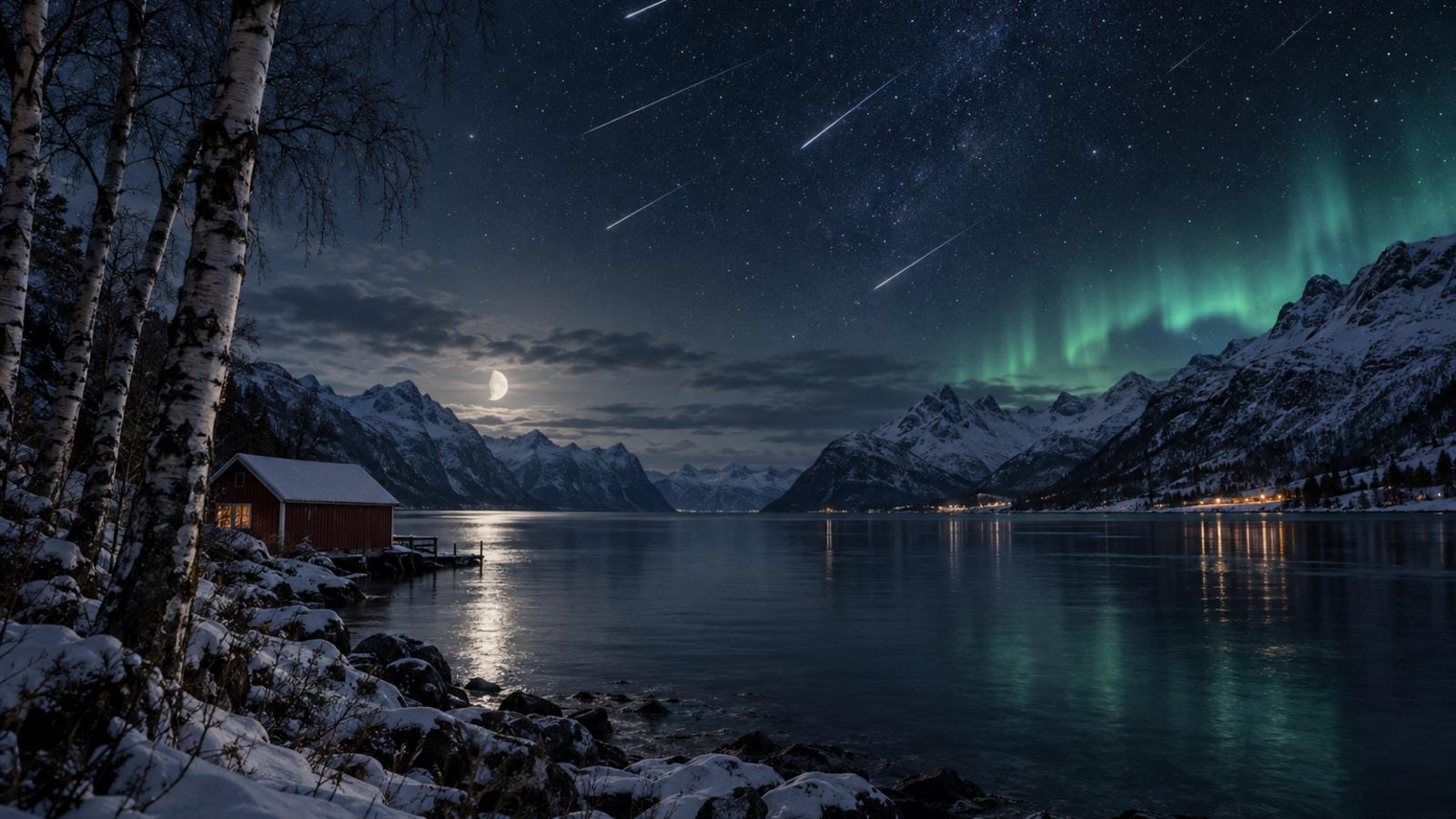
The Leonid meteor shower 2026 peaks on the night of Tuesday 17 to Wednesday 18 November. According to the International Meteor Organization (IMO), maximum falls at 00:45 Norwegian time, and under a dark sky you may see up to 10–15 meteors an hour. The half moon sets in Oslo at 23:20 on Tuesday, so the peak comes in moonless darkness.
Tromsø, meanwhile, sees its last sunrise of the year on Friday 27 November, according to MET Norway, and on 21 November the spacecraft BepiColombo enters orbit around Mercury.
Key facts: the sky over Norway in week 47
- Leonids: active 6–30 November, maximum at 00:45 Norwegian time on 18 November, ZHR of about 15 (IMO).
- Moon: first quarter on 17 November, setting before the peak in all major Norwegian cities (MET Norway).
- Storm: none expected in 2026, though small extra peaks are possible (IMO).
- Tromsø: last sunrise on 27 November, sun back on 15 January 2027 (MET Norway).
- BepiColombo: Mercury orbit insertion on 21 November, science phase from April 2027 (ESA).
When is the Leonid meteor shower 2026, and how many meteors will I see?
The IMO 2026 Meteor Shower Calendar puts the regular maximum at 23:45 UT on 17 November – 00:45 on 18 November in Norway – with a ZHR of about 15.
ZHR, the zenithal hourly rate, assumes the radiant directly overhead and a perfectly dark sky, so real counts are lower. EarthSky expects 10 to 15 an hour under a dark, moonless sky; from a light-polluted town you will see only a handful.
Maslov (2007) places the peak at 17:00 Norwegian time on Tuesday 17 November, again with a ZHR of around 15, and NASA lists the night of 16–17 November as peak night. Tuesday’s early hours are worth a look too.
What are the Leonids?
The Leonids are a meteor shower produced when Earth ploughs through debris shed by comet 55P/Tempel–Tuttle. According to NASA, the comet takes 33 years to orbit the Sun and its nucleus is about 3.6 kilometres across. The grains hit the atmosphere at 71 kilometres per second (IMO), making the Leonids one of the fastest meteor showers of the year.
Where should I look for the Leonids from Norway?
The meteors appear to stream from the constellation Leo. EarthSky notes that this radiant rises around midnight and is highest at dawn, so rates climb through the night.
You do not need to stare at Leo. NASA suggests starting around midnight, lying on your back with your feet pointing east and giving your eyes about 30 minutes to adapt to the dark. Our guide to watching the Orionids has more general tips, and they worked just as well for the Taurids earlier in November.
Will the moon spoil the show?
No. The moon reaches first quarter on 17 November and sets before the peak. These are the times for Tuesday 17 November from MET Norway’s sun and moon API:
- Oslo: moonrise 13:56, moonset 23:20
- Bergen: moonrise 14:19, moonset 23:42
- Trondheim: moonrise 14:13, moonset 23:08
- Tromsø: moonrise 14:22, moonset 21:53
That leaves between one and three hours of moonless dark before the IMO peak at 00:45. On the night into Thursday 19 November, the moon does not set in Oslo until 00:47. Check Yr on Tuesday for cloud.
Will there be a Leonid meteor storm in 2026?
No. NASA defines a meteor storm as at least 1,000 meteors an hour, and the last Leonid storm was in 2002. The IMO calendar cites calculations by Vaubaillon and Sato showing Earth crossing several thin dust trails between 17 and 19 November, but with too few particles for a significant outburst. Minor bumps are possible; a storm is not. The parent comet next reaches perihelion – its closest point to the Sun – on 20 May 2031 (IMO).
When does the polar night begin in Tromsø in 2026?
According to MET Norway, the sun rises in Tromsø for the last time on Friday 27 November, at 11:21, and sets again at 11:41 – just 20 minutes of sun. It does not rise at all from 28 November to 14 January, returning on 15 January 2027. That is 48 days without a sunrise.
On Monday 16 November the sun is up in Tromsø from 09:31 to 13:25, just under four hours. By Sunday 22 November it is up from 10:14 to 12:45 – 1 hour and 23 minutes less.
Further north, the sun disappeared in October, as we reported in our story on Svalbard and the Hunter’s Moon.
Why do sources give different dates for the polar night?
The Norwegian encyclopaedia Store norske leksikon (SNL) defines the polar night, mørketid, as the time of year when the centre of the Sun – sometimes its upper edge – does not rise above the local horizon for a whole day. Because the atmosphere bends sunlight, the southern limit at sea level lies at 67° 8′ north, not at the Arctic Circle. SNL’s generic table gives 26 November–17 January for Tromsø, give or take a day.
MET Norway’s times assume a flat, open horizon, but Tromsø is ringed by mountains. Travel company Fjord Tours says that in practice the darkness lasts from about 21 November to about 21 January. Even so, there is midday twilight, roughly 9 am to 2 pm, says Fjord Tours.
Long dark evenings are also prime aurora time. Our guide to the 2026/27 northern lights season explains how to keep track.
What happens next: BepiColombo arrives at Mercury on 21 November
On Saturday 21 November, BepiColombo is due to enter orbit around Mercury, according to ESA’s live arrival updates. The joint ESA–JAXA mission carries two orbiters: ESA’s Mercury Planetary Orbiter (MPO) and Japan’s Mio.
Launched from Kourou on 20 October 2018, it has needed eight years and nine flybys – one of Earth, two of Venus, six of Mercury. From April 2024 its electric thrusters could not run at full power, and engineers redesigned the route. The transfer module was jettisoned on 3 September 2026.
MPO and Mio are set to separate on 9–10 December, with the science phase starting in April 2027. Nettsak will cover the arrival in a separate story.
Frequently asked questions
When is the best night for the Leonids in 2026?
The night of 17–18 November. According to the IMO, maximum is at 00:45 Norwegian time (23:45 UT on 17 November).
Can I see the Leonid meteor shower from Norway?
Yes. Leo rises around midnight, and the moon sets before the peak everywhere from Bergen to Tromsø. Up to 10–15 meteors an hour are possible under a truly dark sky.
When does the polar night start in Tromsø?
The last sunrise is on Friday 27 November and the sun returns on 15 January 2027, according to MET Norway. The mountains hide it from around 21 November.
When does BepiColombo arrive at Mercury?
The spacecraft enters orbit around Mercury on 21 November 2026, according to ESA. Science operations begin in April 2027.